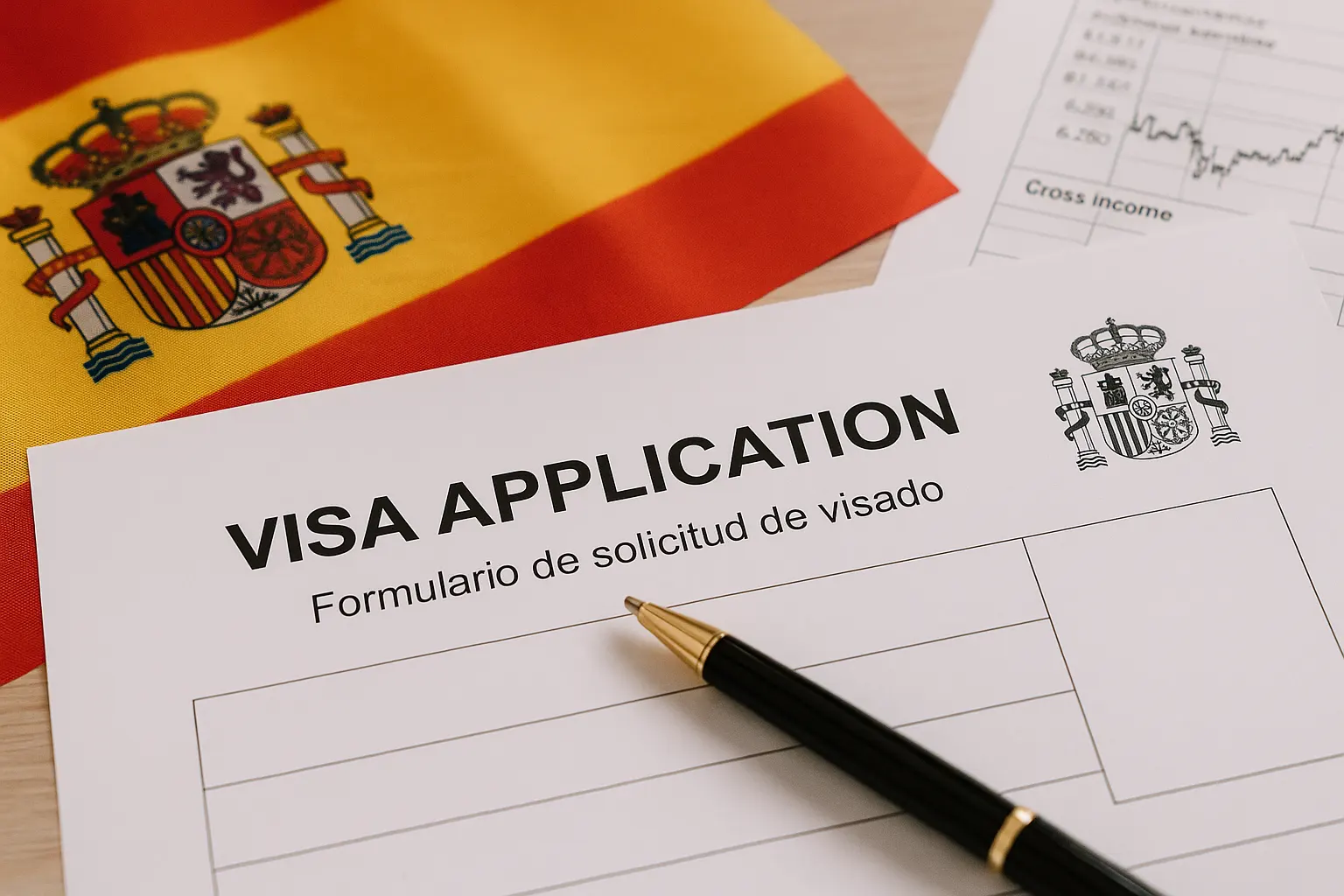
The Spain Digital Nomad Visa has opened new doors for remote workers worldwide, especially attracting US-based W-2 employees eager to work legally from Spain. Recent shifts in the application process have caused unexpected challenges, leading to a wave of W-2 employee denials that have raised concerns among applicants and legal advisors alike.
Key issues revolve around the Certificate of Coverage—a crucial document proving social security contributions remain with the US system during the stay in Spain. Without this certificate, many W-2 employees face visa refusals or lengthy delays. Understanding these changes is essential for anyone applying under this visa category.
This article explores why W-2 workers are suddenly encountering obstacles, clarifies documentation requirements like the Certificate of Coverage Spain digital nomad visa, and offers guidance on navigating the evolving landscape of Spain’s remote work visa program.
Understanding Spain’s Digital Nomad Visa
The digital nomad visa Spain was introduced in 2023 as a groundbreaking initiative designed to attract remote workers from outside the European Union (EU) and European Economic Area (EEA). This visa offers a legal framework for individuals employed abroad who want to live temporarily in Spain while continuing their foreign-based work. Unlike traditional visas, it specifically targets those engaged in remote work, providing a unique opportunity to combine lifestyle flexibility with legal residence.
Key features of the remote work permit Spain include:
1. Eligibility criteria
- Applicants must be non-EU/EEA nationals, such as US citizens or residents of other countries outside Europe.
- Proof of stable remote employment for at least six months prior to application is required.
- Employment must be with a foreign company or through freelance contracts with clients located outside Spain.
- Evidence of sufficient income to support living expenses in Spain is mandatory.
2. Duration and renewals
The initial visa is granted for one year. After this period, holders can apply for renewals that may extend their stay up to five years, provided they continue meeting eligibility conditions.
3. Advantages
Remote workers do not need to establish a local company or operate as freelancers within Spain, simplifying administrative burdens. This visa allows professionals to maintain employment contracts abroad while enjoying Spanish residency rights, including access to healthcare and social services through private insurance.
This visa represents a flexible pathway for international remote workers seeking a high quality of life in Spain without sacrificing their existing employment arrangements. Understanding these elements is essential before navigating the application process—especially for W-2 employees facing recent challenges.
Challenges Faced by W-2 Employees in the Application Process
The Spain Digital Nomad Visa was designed to attract remote workers, but W-2 employees—particularly from the United States—have encountered specific hurdles. A central issue revolves around social security compliance Spain-US agreements and how these impact visa eligibility.
Spanish authorities require clear evidence that applicants remain covered under their home country’s social security system while working remotely in Spain. For U.S.-based W-2 workers, this means demonstrating ongoing contributions to the U.S. Social Security Administration. The key document here is the Certificate of Coverage (CoC), which confirms that the employee is exempt from paying Spanish social security contributions because they continue to contribute in the U.S.
Common reasons for W-2 visa denial include:
- Failure to provide a valid Certificate of Coverage.
- Submission of incomplete or outdated Certificates.
- Inconsistent documentation regarding social security status.
Without this certificate, Spanish immigration officials may view applicants as potentially avoiding Spanish social security obligations, raising compliance concerns. This leads to visa rejections or prolonged processing times, frustrating many legitimate candidates.
Understanding the importance of the Certificate of Coverage cannot be overstated. It serves as proof that W-2 employees meet one of the core eligibility criteria for the Digital Nomad Visa. Applicants should coordinate with their employers and U.S. social security offices well in advance to secure this documentation and avoid application pitfalls.
Careful attention to these requirements helps bridge gaps between U.S. employment structures and Spain’s legal framework, smoothing the path toward visa approval.
Key Documentation Requirements for a Successful Application
The list of required documents digital nomad visa Spain applicants must submit is strict and detailed. For W-2 employees, attention to documentation accuracy can be the difference between approval and rejection.
Criminal Background Checks
One frequently overlooked requirement is the FBI background check apostille. Spanish authorities demand an official FBI criminal record certificate from applicants originating in the United States. This document must carry an apostille stamp to authenticate its validity under international law.
Equally important are certified translations of all documents not originally in Spanish. Criminal records with incomplete or inaccurate translations often cause delays or outright dismissal of the visa application. Employing a sworn translator ensures that legal terminology and nuances are precisely conveyed.
Financial Means and Health Insurance
Applicants must demonstrate sufficient financial resources to support themselves during their stay. The Spanish government currently requires proof of a minimum monthly income of approximately €2,760. This figure is based on Spain’s IPREM (Public Indicator of Multiple Effects Income) and aims to confirm that digital nomads will not become a financial burden on local social services.
Valid Spanish health insurance covering the entire duration of the stay is non-negotiable. Private health insurance policies that meet Spanish standards or European Health Insurance Cards (for EU citizens) satisfy this requirement. Without proof of comprehensive health coverage, visa applications are routinely denied.
Adhering strictly to these documentation requirements increases the chances for W-2 employees applying for the Spain Digital Nomad Visa. Understanding exactly what paperwork is necessary prevents common pitfalls, ensuring smoother processing times and fewer complications during submission.
Navigating the Tax Implications as a W-2 Employee on the Digital Nomad Visa
Understanding Spanish tax residency rules is essential for W-2 employees applying for the Digital Nomad Visa. Spending more than 183 days in Spain within a calendar year generally establishes tax residency. Once classified as a tax resident, an individual becomes liable to pay taxes on their worldwide income under Spanish law. This means income earned abroad, including salary from a US employer, may be subject to Spanish taxation.
Key points about tax obligations for digital nomads in Spain:
- Tax Residency Trigger: Residing in Spain over 183 days.
- Worldwide Income Taxation: Applies once resident status is confirmed.
- Declaration Requirements: Annual filing of Spanish income tax returns is mandatory.
The Beckham Law Spain provides significant relief for qualifying foreign workers relocating to Spain. It allows certain individuals to opt for a special tax regime offering a flat 24% tax rate on their Spanish-source income—up to €600,000 annually—rather than being taxed at the progressive rates that can reach over 45%.
Benefits of the Beckham Law include:
- Reduced tax burden compared to standard rates.
- Eligibility requires becoming a tax resident and applying timely.
- Applicable primarily to employment income generated in Spain.
For digital nomads working remotely via a W-2 arrangement, this law can be advantageous if their income is considered Spanish-sourced or if they take steps to align with the regime’s requirements. Consulting with a specialized tax advisor familiar with digital nomad tax obligations Spain ensures compliance and optimal use of these provisions.
Careful navigation of these rules helps avoid unexpected liabilities and maximizes financial efficiency while living and working legally in Spain.
Tips for a Successful Application as a W-2 Employee Seeking the Digital Nomad Visa
Securing the Spain Digital Nomad Visa as a W-2 employee requires more than just submitting standard documents. Consulting an immigration lawyer in Spain with expertise in digital nomad visas can significantly enhance your application’s success.
Key advantages of professional legal guidance include:
- Personalized case evaluation to identify potential challenges unique to your employment status.
- Tailored strategies for assembling and presenting documentation, especially concerning social security coverage and proof of income.
- Assistance with navigating complex requirements like obtaining the Certificate of Coverage from U.S. authorities.
- Ensuring all paperwork, including FBI background checks and health insurance proofs, meet Spanish legal standards.
NIM Immigration Lawyers specialize in personalized visa application support, offering fully online consultations that streamline communication and document management. Their deep understanding of recent policy shifts affecting W-2 workers helps applicants avoid common pitfalls, accelerating approval times and reducing stress throughout the process.
Additionally, if you are considering furthering your education while working remotely, you might want to explore the option of applying for a student visa.
Conclusion
Securing the Certificate of Coverage is a crucial step in overcoming recent challenges faced by W-2 employees applying for the Spain Digital Nomad Visa. This document confirms continued social security contributions under U.S. law, addressing one of the main reasons for visa denials.
Applicants navigating the complex requirements benefit significantly from expert guidance. Working with specialized immigration professionals ensures:
- Comprehensive evaluation of individual cases
- Tailored strategies to meet evolving legal standards
- Efficient handling of documentation and procedural nuances
NIM Immigration Lawyers offer trusted, client-focused support designed to simplify the application process and increase approval chances. Their expertise in digital nomad visa advice Spain and strategies for overcoming W2 worker denials makes them a valuable partner for anyone pursuing the Spain digital nomad visa W2 employee route.
Investing in professional legal advice transforms uncertainty into confidence, guiding applicants smoothly toward their goal of living and working remotely from Spain.