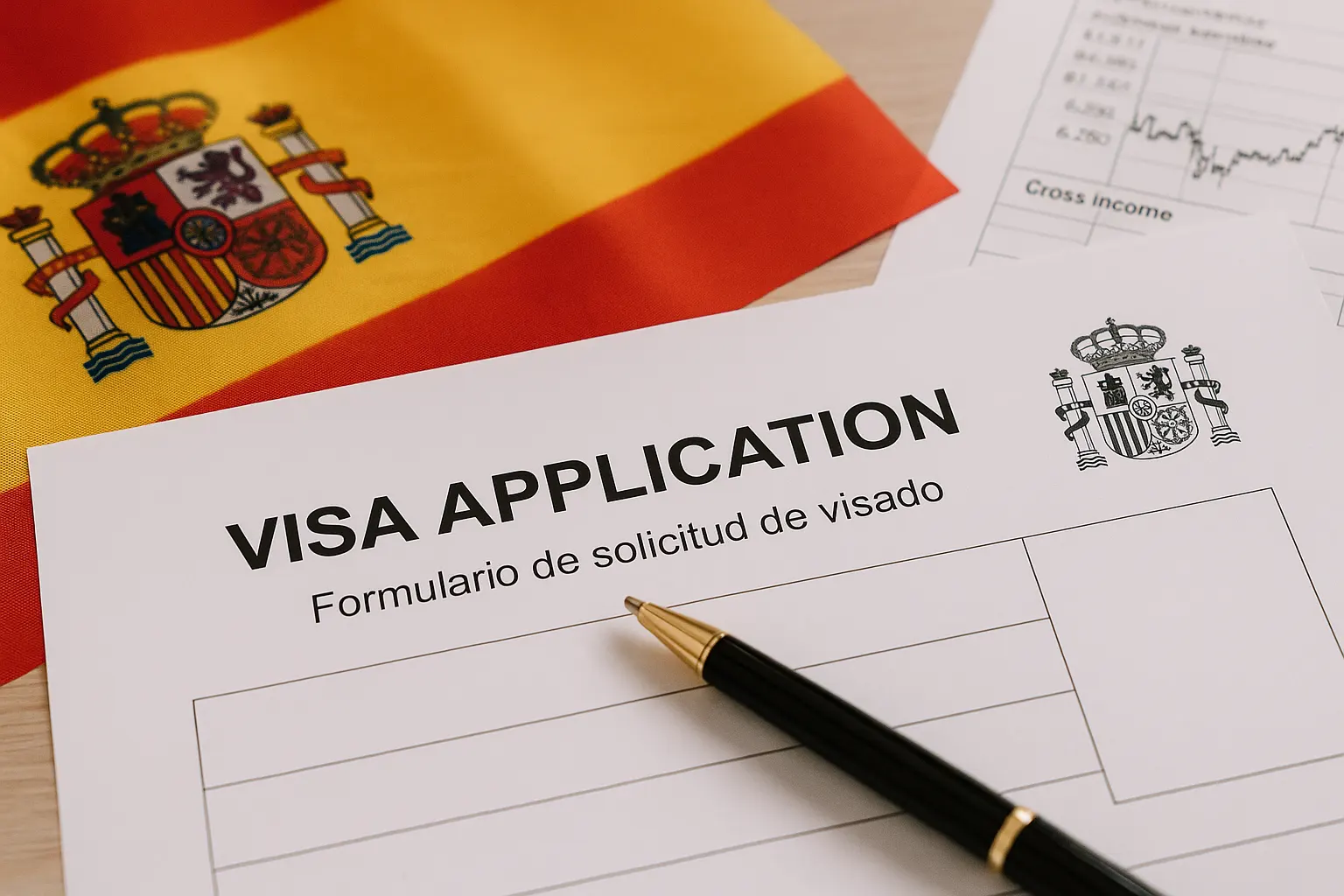


For many US citizens, the appeal of Spain extends far beyond its vibrant culture and beautiful landscapes. The promise of a high quality of life, favorable climate, and a more relaxed pace has led countless individuals to consider making it their long-term home. In 2026, the Spain Digital Nomad Visa offers a compelling pathway not just for temporary remote work, but also for those aspiring to achieve permanent residency in this captivating European nation.
This comprehensive guide provides clear and practical information for understanding how the Spain Digital Nomad Visa can be a crucial stepping stone towards securing your long-term stay in Spain, specifically for a US audience. We will explore the eligibility criteria, the application process, and most importantly, the necessary steps and considerations for transitioning from a temporary Digital Nomad Visa to permanent residency status.
TL;DR
-
The Spain Digital Nomad Visa is a fantastic entry point for US citizens seeking long-term residency in Spain in 2026.
-
After five years of continuous legal residence in Spain, Digital Nomad Visa holders can apply for permanent residency.
-
Maintaining compliance with all visa requirements, including tax obligations and health insurance, is essential throughout your stay.
-
Demonstrating sufficient financial stability and integration into Spanish society will strengthen your permanent residency application.
-
Early planning and understanding the legal nuances are crucial for a smooth transition from temporary visa to permanent residency.
1. Introduction: The Spain Digital Nomad Visa as a Bridge to Permanent Residency
The introduction of the Spain Digital Nomad Visa in recent years has been a game-changer for non-EU citizens, including those from the United States, who wish to live and work remotely from Spain. This particular visa is designed for individuals who can perform their professional activities online, serving clients or employers primarily outside of Spain. What sets it apart for those with long-term aspirations is its potential to serve as a stepping stone towards permanent residency.
In 2026, the landscape for international remote workers continues to evolve, and Spain has positioned itself as an attractive destination. While many digital nomad visas around the world offer only temporary stays, Spain’s offering is unique in its clear pathway to long-term settlement. This guide aims to demystify this process, offering a detailed roadmap for US citizens looking to transform their initial digital nomad experience into a permanent Spanish life.
2. Understanding the Spain Digital Nomad Visa 2026: Initial Requirements for US Citizens
Before considering permanent residency, it’s essential to first successfully obtain and maintain the Spain Digital Nomad Visa. For US citizens in 2026, the primary requirements generally include:
2.1. Eligibility Criteria for the Digital Nomad Visa
-
Nationality: You must be a non-EU/EEA/Swiss citizen, which includes US citizens.
-
Remote Work: You must be able to perform your work remotely for companies or clients outside of Spain. If you work for a Spanish company, your income from Spanish sources generally cannot exceed 20% of your total income.
-
Employment/Client Contracts: You need to demonstrate a stable and consistent work history. This typically means having an employment contract with an overseas company for at least three months prior to the application or, for freelancers (autónomos), proving a consistent client base for at least three months.
-
Professional Experience/Qualifications: Often, a university degree or at least three years of proven professional experience in your field is required.
-
Financial Means: You must prove sufficient financial resources to support yourself in Spain. As of 2026, this typically requires demonstrating funds equivalent to at least 200% of Spain’s minimum interprofessional salary (SMI) for the main applicant, and an additional percentage for dependents. This amount is subject to change annually, so checking the latest official figures is crucial.
-
Clean Criminal Record: A criminal record check from your country of origin (the US) and any other countries where you have resided in the past two years is mandatory.
-
Private Health Insurance: You must secure comprehensive private health insurance with no co-payments (sin copagos) that covers your entire stay in Spain for the initial visa period. This insurance must be authorized to operate in Spain.
-
NO Tourist Overstay: You cannot apply for the Digital Nomad Visa if you are already in Spain as a tourist and are out of status or have overstayed.
2.2. The Application Process for the Initial Visa
The application process can be initiated either from your home country (the US) at a Spanish Consulate or within Spain if you are legally present (e.g., on a tourist visa within the last 90 days and eligible). The general steps include:
-
Gather Required Documents: This is an extensive list including your passport, visa application form, proof of funds, employment/client contracts, professional qualifications, criminal record certificates, health insurance policy, and sometimes a declaration of your remote work arrangement.
-
Pay Application Fees: There are various administrative fees associated with the visa application.
-
Submit Application: Applications submitted from the US go through the relevant Spanish Consulate. Applications from within Spain are typically submitted to the Unidad de Grandes Empresas y Colectivos Estratégicos (UGE-CE).
-
Wait for Resolution: The processing time can vary but is generally within 20-45 business days for applications submitted in Spain, and potentially longer for those submitted at Consulates.
-
Obtain NIE and TIE: Upon approval, if applying from within Spain, you will apply for your Foreigner Identification Number (NIE – Número de Identificación de Extranjero) and your Foreigner Identity Card (TIE – Tarjeta de Identidad de Extranjero). If applying from the US, you will enter Spain with your visa and then apply for your TIE.
The initial Digital Nomad Visa is typically granted for a period of one year. This can then be renewed for up to three years, and subsequently for an additional two years, potentially leading to a maximum of five years of temporary residency before permanent residency becomes an option.
3. Pathway to Permanent Residency in Spain for Digital Nomads
The true advantage of the Spain Digital Nomad Visa lies in its direct path to permanent residency. For US citizens, this is a significant benefit compared to other temporary visas that may not offer such clear long-term prospects.
3.1. The Five-Year Rule for Permanent Residency
According to Spanish immigration law, foreign nationals who have resided legally and continuously in Spain for a period of five years are generally eligible to apply for long-term residency (residencia de larga duración), which is essentially permanent residency. The Digital Nomad Visa counts towards this five-year period.
Key aspect: “Legally and continuously” means that your stays must be authorized by a valid residence permit (like the Digital Nomad Visa) and that you have not been absent from the country for more than certain permissible periods. Generally, for long-term residency, you cannot have been absent for more than six consecutive months within the five-year period, and the total absence should not exceed ten months within the five years. These limits are crucial and must be carefully tracked.
3.2. Steps to Transition from Digital Nomad Visa to Permanent Residency
As you approach the five-year mark, the process for US citizens will involve:
3.2.1. Maintaining Your Digital Nomad Visa Status
You must ensure your Digital Nomad Visa (and its subsequent renewals) remains valid and you comply with all its conditions throughout the five-year period. This includes:
-
Financial Solvency: Continuing to meet the financial requirements.
-
Health Insurance: Maintaining comprehensive health insurance.
-
Tax Compliance: Fulfilling your tax obligations in Spain. Digital nomads are eligible for a special tax regime (often referred to as the Beckham Law) for their first five years, which offers a reduced flat tax rate of 24% on Spanish-sourced income up to €600,000. It’s imperative to comply with all aspects of this regime or the general tax regime if you opt out or are ineligible.
-
Remote Work Status: Continuously demonstrating your ability to work remotely for non-Spanish entities.
3.2.2. Preparing for the Permanent Residency Application
Once you are nearing the five-year cumulative legal residency mark (typically in your fourth year of residency, preparing for renewal for your fifth year, or at the end of your fifth year), you will start gathering documents for the residencia de larga duración application. This generally includes:
-
Proof of Continuous Legal Residence: Your past TIEs and any resolution letters proving the validity and duration of your Digital Nomad Visa and its renewals.
-
Passport: Valid passport.
-
Application Form: The official form (Modelo EX-11).
-
Pagas de Tasas (Fees): Payment of the relevant administrative fees.
-
Criminal Record Check: A new criminal record certificate from the US, and potentially from Spain if you have had any legal issues during your stay.
-
Proof of Financial Means: While the requirements may be less stringent than the initial visa, you still need to demonstrate you have sufficient means to support yourself without being a burden on the state. This can be through salary, savings, or other income.
-
Social Security Affiliation (or equivalent): Proof of your social security contributions, either as an employee or as an autónomo (self-employed). This is a crucial element demonstrating your integration and contribution to the Spanish system. Your Número de Afiliación a la Seguridad Social (NUSS) and records of contributions via Modelo TA.1 (for autónomos) will be important.
3.3. Considerations for a Smooth Transition
-
Professional Legal Advice: Given the complexities of immigration law, engaging with a specialized immigration lawyer in Spain is highly recommended from the outset, and especially as you approach the permanent residency application. They can provide tailored advice and ensure all documents are correctly prepared.
-
Language Integration: While not a strict legal requirement for permanent residency, demonstrating some integration into Spanish society, including language proficiency, can be beneficial. It also significantly enhances your quality of life.
-
Tax Residency: Understand your tax obligations. Typically, if you spend more than 183 days in Spain within a calendar year, you become a tax resident, regardless of your visa status.
-
Record Keeping: Keep meticulous records of all your visa applications, official communications, income statements, tax filings, and travel dates. This documentation will be invaluable for your permanent residency application.
4. Differences Between Digital Nomad Visa and Permanent Residency
It’s important for US citizens pursuing this path to understand the fundamental differences:
-
Duration: The Digital Nomad Visa is a temporary residence permit (up to 5 years through renewals), whereas permanent residency allows you to reside in Spain indefinitely.
-
Renewal: The Digital Nomad Visa requires periodic renewals. Permanent residency typically requires renewal of the physical card (TIE) every five years, but the residency status itself is indefinite.
-
Work Rights: While both allow you to work remotely, permanent residency grants broader work rights within Spain, allowing you to work for Spanish companies without the same restrictions as the Digital Nomad Visa.
-
Mobility: Both allow free travel within the Schengen Area.
-
Stability: Permanent residency offers a much higher degree of stability and security in your long-term life in Spain.
5. Key Takeaways
-
The Spain Digital Nomad Visa provides a clear avenue for US citizens to eventually obtain permanent residency.
-
Consistent compliance with the initial visa’s requirements is crucial for a successful long-term transition.
-
Five years of continuous legal residence is the general threshold for applying for permanent residency.
-
Meticulous record-keeping, financial stability, and adherence to tax laws are critical throughout the process.
-
Seeking expert legal guidance is a wise investment to navigate the complexities of Spanish immigration law.
6. Authority Sources
Ministerio de Inclusión, Seguridad Social y Migraciones (Ministry of Inclusion, Social Security and Migration).
Unidad de Grandes Empresas y Colectivos Estratégicos (UGE-CE).
Ley 14/2013, de 27 de septiembre, de apoyo a los emprendedores y su internacionalización (Law 14/2013, of September 27, on support for entrepreneurs and their internationalization).
Dirección General de Migraciones (General Directorate of Migrations).
Agencia Estatal de Administración Tributaria (AEAT – Spanish Tax Agency).
7. Unlock Your Spanish Dream: Begin Your Permanent Residency Journey Today!
Navigating the journey from a Digital Nomad Visa to permanent residency in Spain for US citizens in 2026 can seem daunting, but it is entirely achievable with careful planning and adherence to the legal framework. If you’re a US citizen dreaming of calling Spain your permanent home, the Digital Nomad Visa is your golden ticket. Don’t let the complexities deter you. Start planning your move, ensure you meet the eligibility criteria, and embark on a fulfilling life in Spain. For personalized assistance and to ensure a smooth application process, we recommend consulting with immigration experts specializing in Spanish residency.
Citations
This text references the following articles:
-
Can You Get Permanent Residency with Spain Digital Nomad Visa? — “Yes! You can get permanent residency with Spain’s digital nomad visa. After living in Spain full-time for five years, you may be eligible to apply for …”
-
Permanent Residency in Spain with the Digital Nomad Visa – YouTube — “Did you know that Spain’s digital nomad visa leads to permanent residency after five years?! We’re diving into the all of the details …”
-
7 Digital Nomad Visas that Lead to Residency and Second Citizenship — “Digital nomads become eligible for permanent residence after five years of living in Spain. After another five years, foreigners can apply …”
-
Spain Digital Nomad Visa: 2026 Complete Guide — “After 5 years of continuous legal residence (at least 183 days per year), you can apply for permanent residency in Spain. For Spanish …”
-
Spain digital nomad visa requirements: 2025 guide – Oyster HR — “Digital nomads who maintain their visas and meet the residency requirements for five consecutive years can apply for permanent residency with …”