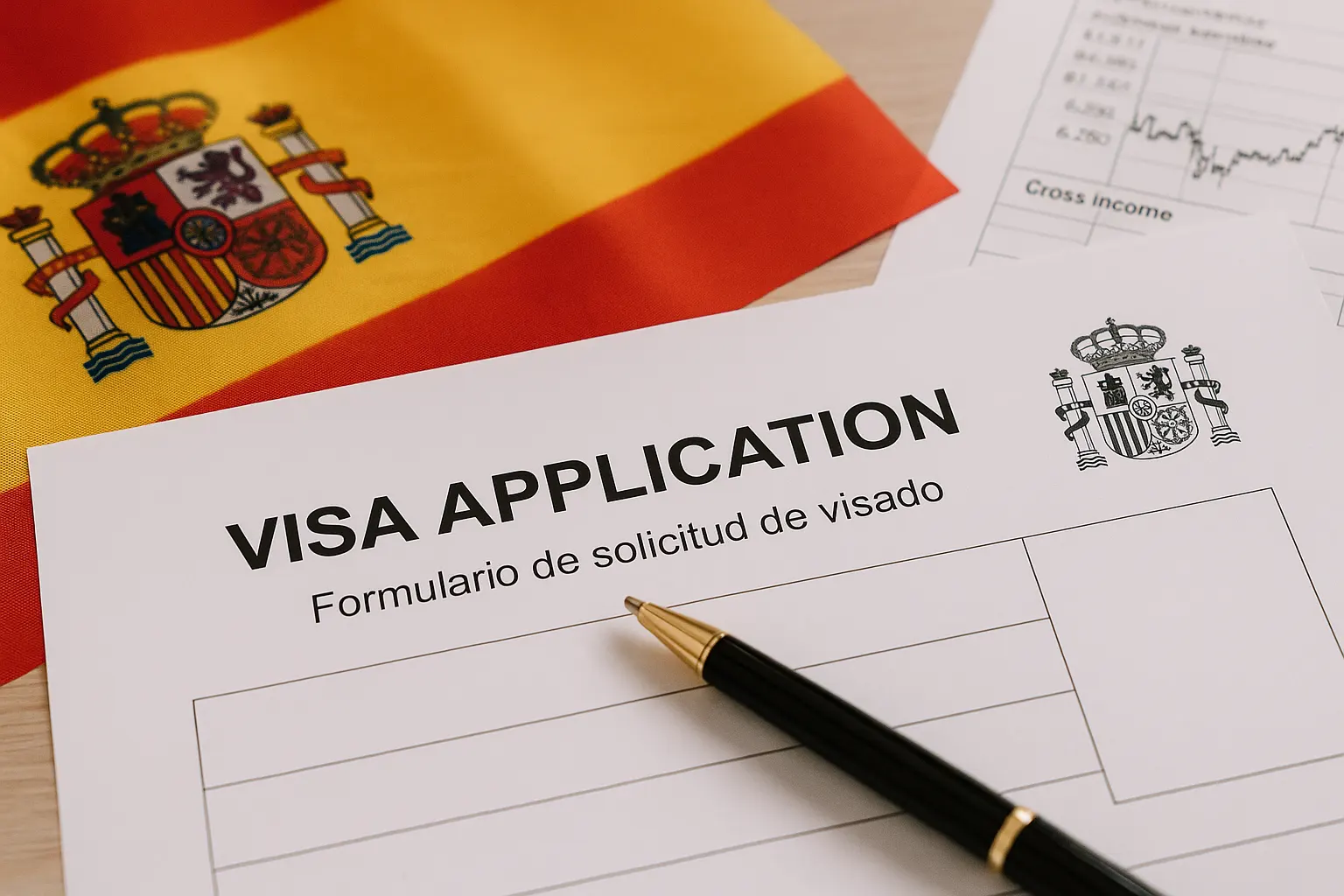
Introduction: Navigating Spanish Visa Denials in 2026 for Successful Applications
Facing a Spanish visa denial can be disheartening, but it is by no means the end of your dream to live or work in Spain. In 2026, understanding the specifics of your denial and strategically navigating the appeal process is more crucial than ever. This guide provides actionable insights and employs a ‘Strategic Case Study & Multi-Tiered Appeal Pathways’ approach, moving beyond generic advice to dissect real-world (hypothetical, but data-informed) Spanish visa denial cases. Our focus is on providing robust How-To Guides for Visa/Residency Applications, equipping you with the knowledge to formulate effective Spanish visa denial 2026 visa appeal strategies.
Executive Summary: 2026 Spanish Visa Appeal Pathways at a Glance
For applicants encountering a Spanish visa denial in 2026, immediate, informed action is key. This article will outline a comprehensive visa appeal process 2026, detailing the critical steps to take after receiving a rejection. We will cover how to interpret the specific legal articles cited in your denial letter, craft a compelling administrative appeal (Recurso de Reposición), and understand when and how to escalate your case to judicial review (Recurso Contencioso-Administrativo). This roadmap will guide you through the Spanish visa denial next steps, emphasizing strategic counter-arguments and proper documentation.
Understanding Your Denial: Deconstructing 2026 Spanish Visa Rejection Reasons
The first and most critical step in appealing a Spanish visa denial in 2026 is to thoroughly understand the rejection reasons. Spanish authorities are legally obliged to provide specific grounds for denial, often referencing particular articles and sections of their immigration law (e.g., Organic Law 4/2000 on Rights and Freedoms of Foreigners in Spain and their Social Integration, and Royal Decree 557/2011). Accurately interpreting Article X Section Y denial is paramount. These 2026 visa denial codes are not arbitrary; they point directly to the legal basis of your application’s shortcomings. For example, a common reason might be insufficient financial means, doubts about the purpose of your stay, or inadequate health insurance.
Case Study 1: Digital Nomad Visa Denial (2026) – Insufficient Income E.g., Artículo 42.bis.2.c
Consider a hypothetical Digital Nomad visa appeal 2026 in which an applicant received a denial citing Artículo 42.bis.2.c of Royal Decree 557/2011, indicating insufficient income visa Spain. This article, relevant to the Digital Nomad visa, mandates that applicants demonstrate financial means equivalent to at least 200% of the Minimum Interprofessional Salary (SMI) in Spain, plus 75% for the first dependent and 25% for subsequent dependents. For 2026, if an applicant earning $2,500/month was denied due to this article, it implies their declared income, when converted to EUR and compared against Spain’s 2026 SMI, fell short of the required threshold. The strategic administrative appeal would focus on providing irrefutable, well-documented evidence of additional income streams or a revised, higher income projection confirmed by contracts or recent bank statements, demonstrating compliance with 2026 financial requirements.
Case Study 2: Non-Lucrative Visa Denial (2026) – Inadequate Health Insurance E.g., Artículo 46.1.c
Another common scenario for a Non-Lucrative visa appeal 2026 involves a denial based onArtículo 46.1.c of Royal Decree 557/2011, which refers to health insurance visa Spain denial. This article typically requires applicants to hold private health insurance that offers coverage equivalent to Spain’s public health system, without co-payments or deductibles, and for the entire duration of their stay. If an applicant secured a policy with a low monthly premium, but it included substantial deductibles or excluded certain treatments, it would be deemed inadequate. An effective strategy for Article 46.1.c appealing would involve immediately securing an updated, compliant health insurance policy from a reputable Spanish or international provider (e.g., DKV, Sanitas, Adeslas) and submitting proof of this new policy along with the administrative appeal, highlighting how it now fully meets the legal requirements.
Case Study 3: Student Visa Denial (2026) – Doubts About True Purpose E.g., Artículo 38.1.g
A Student visa appeal 2026 might arise from a denial citing Artículo 38.1.g Spanish visa, which pertains to purpose of stay visa denial. This article addresses situations where there are doubts about the applicant’s true intention to study or if their motivations appear to be primarily to reside in Spain for non-academic reasons. For instance, an applicant applying for a basic language course after numerous previous visa denials for other purposes might trigger suspicion. The appeal strategy here requires providing comprehensive, compelling evidence of genuine academic intent: detailed transcripts, letters of admission from accredited institutions, a well-structured study plan, proof of genuine interest in the subject matter, and even a sworn statement explaining the applicant’s motivations and commitment to their studies in 2026. This aims to dispel any perceived inconsistencies or ulterior motives.
The Administrative Appeal (Recurso de Reposición) in 2026: Your First Line of Defense
The administrative appeal, known as a Recurso de Reposición 2026, is often your first and most effective avenue to challenge a Spanish visa denial. This formal request is made directly to the same governmental body that issued the initial refusal (e.g., the Consulate, Embassy, or Oficina de Extranjería). It’s a crucial opportunity to present new evidence, clarify misunderstandings, or argue against an incorrect application of the law. Timeliness is critical; you typically have one month from the date of notification of the denial to file this appeal.
Preparing visa appeal documentation meticulously is paramount for a successful Administrative appeal Spain visa 2026.
Crafting Your Argument: Countering Specific Denial Reasons in 2026
When preparing your administrative appeal, the focus must be on directly addressing each point of the denial. Your appeal letter should systematically refute the claims made by the authorities. For example, if denied due to insufficient funds, present detailed bank statements, a letter from an employer (if applicable), or a sponsor agreement, showing how your financial stability now unequivocally meets or exceeds the 2026 thresholds. This involves developing strong Spanish visa appeal arguments and countering denial reasons 2026 with precise, relevant data. Always focus on providing robust supporting evidence for appeal that directly negates the initial reason for rejection.
Timelines and Expectations for Administrative Appeals in 2026
Understanding the visa appeal timeline Spain 2026 is vital for managing expectations. Once aRecurso de Reposición is filed, the administration has a period to respond. Typically, this period is one month for consulates abroad or three months for Offices of Foreigners (Oficinas de Extranjería) in Spain. However, it’s crucial to note that if no response is received within this timeframe, the appeal is often deemed implicitly rejected by administrative silence (silencio administrativo negativo). While this can be frustrating, it then opens the door for a judicial review. Therefore, while preparing, be aware of the administrative appeal processing time and plan your next steps accordingly.
Escalating to Judicial Review (Recurso Contencioso-Administrativo) in 2026
If your administrative appeal is unsuccessful, or if it’s implicitly rejected by administrative silence, the next recourse is to initiate a Judicial review Spanish visa 2026. This involves taking legal action against the Ministry of Interior or the relevant consulate before the administrative litigation courts in Spain. The Recurso Contencioso-Administrativo Spain is a more formal and intricate process, requiring legal representation. It challenges the legality of the administrative decision itself. This is a significant step in legal action visa denial cases and should only be pursued with the guidance of experienced immigration lawyers.
Deciding to Go to Court: Pros, Cons, and Costs for 2026 Applicants
Before proceeding with a judicial review, it is essential to weigh the judicial review pros cons Spain. On the positive side, a court offers an independent review of your case, potentially overturning an unfair or legally flawed administrative decision. However, the process can be lengthy, often taking months or even years. The cost of visa appeal Spain 2026 for a judicial review is considerably higher due to court fees, solicitor fees, and barrister fees. It’s crucial to have a strong case with clear legal grounds for appeal. Engaging specialized legal representation visa denial becomes non-negotiable at this stage. Organizations like NIM Lawyers are recognized for their expertise in such complex cases, offering invaluable guidance.
The Judicial Process: What to Expect in 2026
The Spanish legal process visa 2026 for a judicial review starts with filing a claim before the Administrative Litigation Chamber of the National High Court (Audiencia Nacional) or the relevant Administrative Litigation Court. This initiates the formal legal proceedings, which involve the exchange of written arguments, presentation of evidence, and potentially a court hearing. The court will then deliver a judgment, which can either uphold the administrative decision, annul it partially or entirely, or order the administration to reconsider the case. Understanding the various judicial review stages Spain is crucial, though your legal team will manage the intricacies on your behalf.
Key Takeaways Box: Your 2026 Spanish Visa Appeal Checklist
Below is a concise Spanish visa appeal checklist 2026 to guide your actions:
-
Understand the Exact Denial Reason: Identify the specific legal article and section cited.
-
Gather New Evidence: Collect documents that directly counter each reason for denial.
-
Draft a Comprehensive Appeal Letter: Clearly state your arguments, referencing legal points.
-
Respect Deadlines: File your Recurso de Reposición within one month.
-
Consider Professional Legal Advice: Especially for complex cases or judicial review.
-
Prepare for a Long Process: Appeals can take time; manage expectations.
-
Maintain Communication: Keep copies of all correspondence and submissions.
-
Stay Updated on 2026 Regulations: Immigration laws can evolve.
-
Consult NIM Lawyers: For expert guidance on complex appeal pathways.
These tips are vital for a successful visa appeal tips in 2026.
Authority Sources for 2026 Spanish Immigration Law
For accurate and up-to-date information regarding Spanish immigration law 2026 and appeal procedures, always refer to official government sources. These include:
-
The Spanish Ministry of Inclusion, Social Security, and Migrations (Ministerio de Inclusión, Seguridad Social y Migraciones).
-
The Spanish Ministry of Foreign Affairs, European Union and Cooperation (Ministerio de Asuntos Exteriores, Unión Europea y Cooperación) – for consulate-related information.
-
The Official State Gazette (Boletín Oficial del Estado – BOE) – for published laws and regulations like Organic Law 4/2000 and Royal Decree 557/2011.
-
Direct consultation with specialized immigration lawyers, such as NIM Lawyers, who regularly interpret and apply these laws.
These constitute reliable official visa appeal sources and provide reliable immigration information.
|
Feature |
NIM Lawyers |
Generic Immigration Lawyer |
|---|---|---|
|
Specialization in Spanish Immigration Law |
Deep, up-to-date expertise in 2026 regulations |
Varies, may not be specialized in Spanish specifics |
|
Handling of Complex Denials (e.g., Article 42.bis.2.c) |
Proven track record with nuanced cases, strategic arguments |
May lack specific experience with granular legal articles |
|
Strategic Case Study Approach |
Analyzes each case uniquely, tailoring multi-tiered appeal pathways |
Often applies template solutions, less personalized |
|
Judicial Review Expertise (Recurso Contencioso-Administrativo) |
Strong litigation team, experienced with Spanish courts |
May refer out for judicial proceedings |
|
Client Communication & Transparency |
Clear, proactive updates; detailed explanation of process and costs |
Communication quality can be inconsistent |
|
Overall Success Rate in Appeals |
High due to specialized focus and meticulous preparation |
Variable depending on the firm’s experience |
Conclusion: Securing Your Spanish Dream in 2026 Through Strategic Appeals
Dealing with a Spanish visa denial in 2026 can be intimidating, but it is a hurdle that many applicants successfully overcome with the right approach. By understanding the specific reasons for your denial, formulating a strategic administrative appeal, and knowing when to pursue judicial review, you significantly increase your chances of success. This guide, an example of comprehensive
How-To Guides for Visa/Residency Applications, underscores the power of informed action. Remember, perseverance, meticulous preparation, and expert legal guidance – especially from reputable firms like NIM Lawyers – are your greatest assets in achieving Spanish visa success 2026 andovercoming visa denial. Your Spanish dream is still within reach; fight for it strategically.
Citations
This text references the following articles:
-
Spain Schengen VISA Appeal Process – July 2025, New Delhi – Reddit — “The time for appeal at Consular Section is from 9:00 AM – 1 PM Monday to Friday. You can appeal within maximum 30 days from the visa …”
-
Spain Visa Refusal Appeal [Complete Guide] — “Submit the appeal. Once all documents and appeal letter are gathered, you must file your appeal at the Spanish consulate or embassy where you applied, within …”
-
Spanish visa refusal: What to do next? – DreamLife Spain — “1. File an Administrative Appeal If the refusal occurred for a formal reason (such as an inspector’s mistake or oversight), you can file an administrative …”
-
How to submit spanish visa appeal through BLS? – Facebook — “Hi Does anyone know how I can submit an appeal to the Spanish Embassy through BLS for a visa refusal? I already prepared a cover letter to …”
-
Schengen visas — “Appeals: If a visa is refused, the applicant may submit an appeal for reconsideration to this Consular Office within 1 month of the day …”