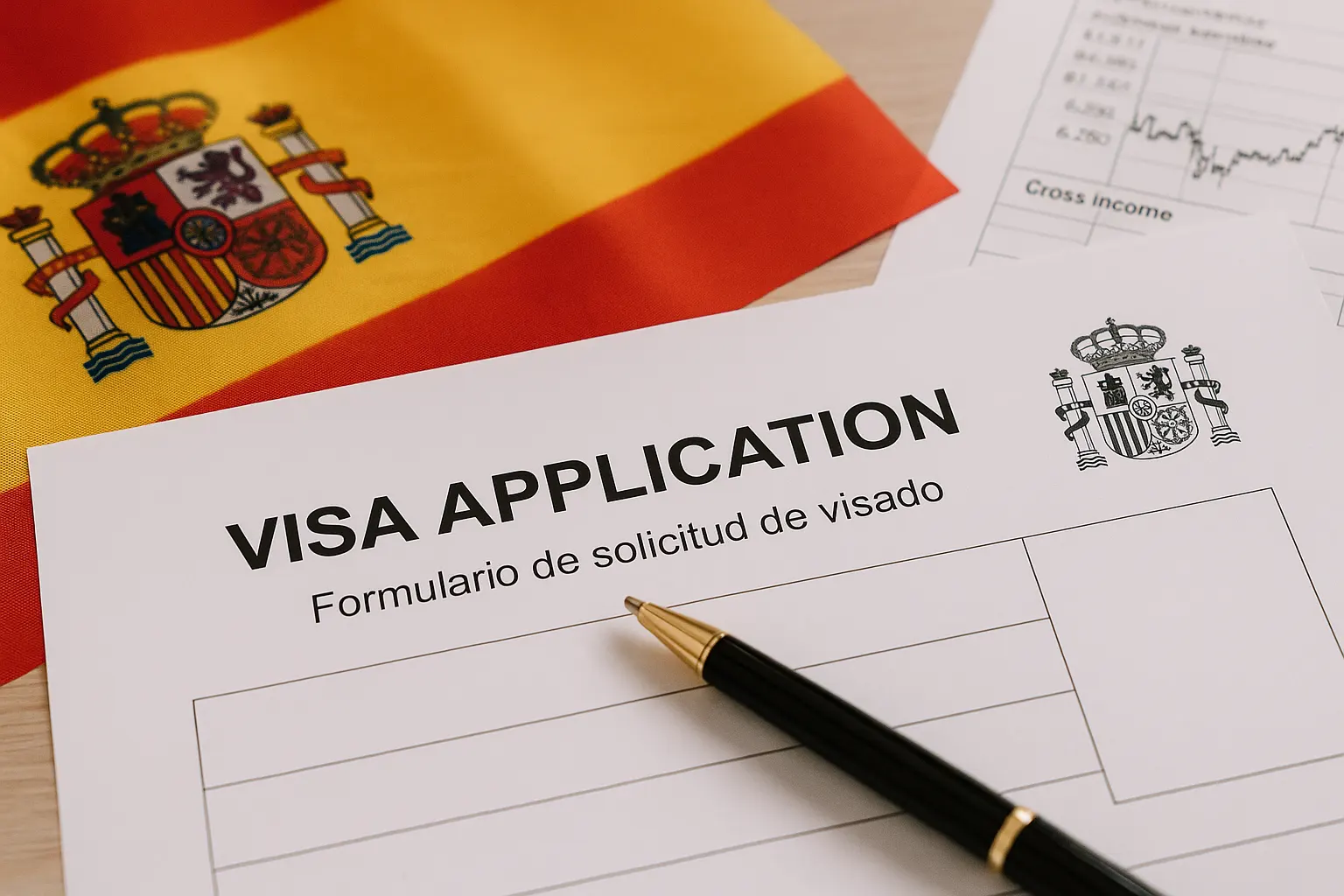


Welcome to 2026. Navigating the Spanish visa application process can be an intricate journey, often fraught with complex legal terminology that can be a significant barrier to success. This article provides an essential decode of Spanish legal terms visa 2026 applicants will encounter, employing an ‘actionable lexicography’ approach specifically designed to empower you.
Navigating the Bureaucracy: Essential Spanish Legal Terms for Visa Applicants in 2026
The Spanish visa application landscape in 2026 demands more than just understanding the requirements; it necessitates a deep comprehension of the bureaucratic language. This guide goes beyond simple definitions. It acts as an indispensable ‘decoder’ for official Spanish legal terminology, equipping you with the ‘navigational intelligence’ needed for a smooth 2026 visa application journey. Our focus is on providing practical, context-aware insights into the terms you will encounter.
Executive Summary: Your 2026 Visa Application Language Decoder
For visa applicants in 2026, this glossary is your immediate, practical toolkit. It dissects critical Spanish legal terms, explaining not just what they mean, but their real-world impact on your application. You’ll gain insight into when and where these terms appear, common pitfalls, and specific 2026 foresight regarding their use. This ‘actionable lexicography’ will transform confusing jargon into clear instructions, increasing your confidence and efficiency in managing your 2026 visa process. Think of it as your essential TL;DR for all official Spanish visa communications in 2026.
Understanding the ‘Lifecycle Context’: When and Where You’ll Encounter These Terms
The ‘lifecycle context’ approach is central to this guide. Legal terms are best understood when placed within the specific stage of your visa application process. For example, some terms are prominent during initial document submission, others during review, and still others during the final resolution or appeal stages. By understanding this context, you can proactively prepare for and correctly respond to official communications, minimizing delays and increasing your chances of success in 2026.
Frequency of Complex Legal Terms by Application Stage (2026) (%)
Review & VerificationAppeals/Post-Decision015304560
Source: article data
Key Glossary Terms for 2026 Visa Applications (A-Z)
This section provides a comprehensive glossary tailored for 2026 visa applicants, employing our ‘actionable lexicography’ model. Each entry offers a definition, its lifecycle context, practical implications, common translation nuances, 2026 foresight, and a mini case-study snippet for real-world understanding.
Acta de Manifestaciones
- Definition: A sworn statement or declaration made before a notary public, providing formal corroboration of facts or intentions.
- Lifecycle Context: Often required for specific visa types, such as non-lucrative visas, where applicants must declare their intent not to work, or for family reunification, confirming relationships. It’s typically requested early in the application process or during documentation review.
- Practical Implications: This document carries significant legal weight. Any false statement can lead to immediate rejection or future legal issues. Ensure all information is accurate and fully understood before signing.
- Translation Nuances: While often translated as “affidavit,” it specifically refers to a notarial act in Spain. Synonyms like “declaración jurada ante notario” might appear.
- 2026 Foresight: Authorities in 2026 are increasingly relying on formal declarations to verify applicant intentions, especially for long-term residency visas. Expect its importance to remain high.
- Mini Case-Study Snippet: Case Study: During her 2026 non-lucrative visa application, Maya submitted an Acta de Manifestaciones stating she would not work. Later, an immigration officer discovered undeclared income from online freelancing. Her visa was immediately revoked, demonstrating the strict adherence required for such declarations.
Aportar / Aportación de Documentos
- Definition: To provide or submit documents. Refers to the act of submitting required paperwork for your visa application.
- Lifecycle Context: This term is ubiquitous, appearing at every stage where documentation is required, from initial submission to subsequent requests for additional information.
- Practical Implications: Timely and complete “aportación” is crucial. Missing or unverified documents are a leading cause of delays or rejections. Keep clear records of what you’ve submitted and when.
- Translation Nuances: Can also be seen as “presentar documentación” or “adjuntar documentos.”
- 2026 Foresight: With increasing digitalization in 2026, many “aportaciones” are now done electronically via online platforms, requiring careful attention to file formats and upload limits.
- Mini Case-Study Snippet: Case Study: When Carlos received a “requerimiento” in 2026, he misunderstood “aportar copia compulsada” as just scanning his passport. His failure to “aportar” a certified copy led to a significant delay in his student visa approval.
Compulsa / Copia Compulsada
- Definition: An authenticated copy of an original document, verified by an authorized entity (e.g., notary, public office, consulate) to be a true likeness.
- Lifecycle Context: Frequently requested for official documents like passports, birth certificates, marriage certificates, and academic diplomas, especially after initial submission or during specific review points.
- Practical Implications: Do not submit original documents unless explicitly requested, as they may not be returned. Obtaining “copias compulsadas” can take time and may involve fees. Plan accordingly.
- Translation Nuances: Often translated as “certified copy” or “attested copy.” The Spanish term implies a formal, official verification.
- 2026 Foresight: While digital submissions are growing, the requirement for physical “copias compulsadas” for key documents remains standard for many visa types in 2026, particularly for foreign-issued documents.
Diligencia
- Definition: Refers to a specific administrative act or action taken within a procedure, often recorded formally. It also implies promptness, care, and due diligence in handling a matter.
- Lifecycle Context: You might see phrases like “se ha practicado la diligencia oportuna” (the appropriate action has been taken) or be asked to act with “diligencia” in responding to a request.
- Practical Implications: When mentioned in official communication, it implies that a formal step has been executed or that you need to act promptly and carefully. Misunderstanding this can lead to missed deadlines or incomplete responses.
- Translation Nuances: Can range from “proceeding” or “action” to “due diligence” or “expedition.” Its meaning is highly context-dependent.
- 2026 Foresight: In 2026, the administrative “diligencia” is increasingly linked to automated system updates, meaning a record of action is often digitally logged.
- Mini Case-Study Snippet: Case Study: Elena’s visa application, paused due to a missing document, was reactivated after the consulate performed a “diligencia” to verify an attached correction. Her prompt submission of the missing paperwork demonstrated her own “diligencia,” speeding up the process.
Expediente
- Definition: The entire set of documents and administrative proceedings related to a specific case or application. It’s essentially your complete file.
- Lifecycle Context: Your visa application becomes an “expediente” from the moment it’s submitted. References to its “estado” (status) or “número de expediente” are common throughout the process.
- Practical Implications: Knowing your “número de expediente” is vital for tracking your application and for any communication with immigration authorities. All your documents and decisions will be part of this file.
- Translation Nuances: “File,” “case file,” “record,” or “dossier.”
- 2026 Foresight: Many regions in 2026 offer online portals where applicants can check the “estado de su expediente” using their NIE or “número de expediente.”
Inadmitido a Trámite
- Definition: A formal declaration that an application has not been accepted for processing, usually due to a fundamental defect or incompleteness. It means it hasn’t even begun to be properly evaluated.
- Lifecycle Context: This decision typically occurs very early in the application process, often after an initial review of submitted documents.
- Practical Implications: This is a serious setback. It’s not a rejection based on merit, but on procedural flaws. You’ll usually need to correct the issues and re-submit a completely new application. Understanding the exact reason provided is key.
- Translation Nuances: “Not admitted for processing,” “application not accepted,” “procedurally inadmissible.”
- 2026 Foresight: For 2026, immigration offices are streamlining initial checks. If your application is “inadmitido a trámite,” the reason code provided will be increasingly specific, aiding in correction.
Notificación
- Definition: An official communication or notice sent by an administrative body to an interested party, formally informing them of a decision, request, or procedural step.
- Lifecycle Context: Notifications are constant throughout the visa process, informing you of document requests (“requerimientos”), decisions (“resoluciones”), or appointments.
- Practical Implications: The date of “notificación” is legally binding and often starts a countdown for deadlines. It’s crucial to ensure your contact details are current so you receive these promptly. Electronic notifications are increasingly common.
- Translation Nuances: “Notification,” “notice,” “official communication.”
- 2026 Foresight: Digital “notificaciones” via secure online platforms (e.g., Carpeta Ciudadana) are becoming the standard in 2026, often replacing traditional mail for speed and traceability.
- Mini Case-Study Snippet: Case Study: When Sofia failed to check her digital “notificaciones” regularly in 2026, she missed a crucial “requerimiento” deadline. Her application was archived due to her lack of response, highlighting the importance of monitoring official channels.
Recurso
- Definition: An administrative or legal appeal filed against an unfavorable decision made by an authority. It’s your right to challenge a resolution.
- Lifecycle Context: This term comes into play after a negative resolution (“desfavorable”). Common types include “recurso de reposición” (to the same body that made the decision) and “recurso alzada” (to a superior administrative body).
- Practical Implications: Filing a “recurso” requires careful legal argumentation and adherence to strict deadlines (often one month for administrative appeals). Seeking legal counsel is highly recommended.
- Translation Nuances: “Appeal,” “remedy,” “recourse.”
- 2026 Foresight: While the right to “recurso” remains protected, the administrative processing times for appeals in 2026 are still significant. Strong initial applications remain the best strategy.
Requerimiento
- Definition: An official request from an administrative body for additional documentation, clarification, or correction of information provided in an application.
- Lifecycle Context: This is one of the most common communications you’ll receive after initial submission if your application is incomplete or unclear. It means your “expediente” is paused until you respond.
- Practical Implications: A “requerimiento” typically provides a strict deadline (often 10 working days) to submit the requested items. Failure to respond or incomplete responses can lead to the archiving or rejection of your application. Respond precisely to what is asked.
- Translation Nuances: “Request for information,” “demand,” “formal requirement.”
- 2026 Foresight: In 2026, these are often digitally issued. The specific items requested in a “requerimiento” are becoming highly detailed, reflecting advanced data analysis of applications.
- Mini Case-Study Snippet: Case Study: Juan received a “requerimiento” for a certified copy of his bank statements. He mistakenly sent only a plain scan. His application was archived as he failed to provide the “requerimiento” correctly, stressing the need for precise responses.
Resolución
- Definition: The formal decision or outcome of an administrative procedure, such as a visa application. It can be favorable (“favorable”), unfavorable (“desfavorable”), or a request for more information.
- Lifecycle Context: This is the penultimate step in your application process, informing you whether your visa is granted or denied.
- Practical Implications: A “resolución favorable” allows you to proceed with the next steps (e.g., getting a TIE). A “resolución desfavorable” means your application is rejected, and you’ll need to consider “recursos” or a new application.
- Translation Nuances: “Decision,” “ruling,” “outcome.”
- 2026 Foresight: Expected processing times for “resoluciones” in 2026 vary by consulate and visa type. Many administrative bodies are pushing for more transparency regarding these timelines.
Tasa
- Definition: An official fee or tax paid to the state for the processing of an administrative service, such as a visa application.
- Lifecycle Context: Visas always require the payment of specific “tasas.” This is usually an early step, and proof of payment is a mandatory document (“justificante del pago de la tasa”).
- Practical Implications: Ensure you pay the correct “tasa” for your specific visa type and keep the proof of payment. Payment methods are usually through specific bank forms (Model 790, etc.) or online portals. Incorrect payment can invalidate your application.
- Translation Nuances: “Fee,” “tax,” “charge.”
- 2026 Foresight: In 2026, more “tasas” can be paid digitally, though specific forms often still need to be generated and presented. Confirm the operative “Modelo” for your application.
Acroñimos y Siglas Esenciales de 2026: Decoding Spanish Visa Acronyms
Spanish administrative communication is replete with acronyms. Understanding these is vital for any 2026 visa applicant.
- NIE (Número de Identificación de Extranjero):
- Meaning: Foreigner’s Identification Number.
- Purpose in Visa Context: This is your fundamental identification number in Spain, essential for any legal, administrative, or financial activity. It’s often issued provisionally upon visa approval and becomes permanent with the TIE.
- How obtained/used: You’ll be assigned a NIE once your visa is approved or upon entering Spain with certain long-stay visas. It’s required for literally everything from opening a bank account to signing a lease.
- 2026 Foresight: The NIE remains the bedrock of foreign identification in 2026. Delays in obtaining it can hinder integration into Spanish society.
- TIE (Tarjeta de Identidad de Extranjero):
- Meaning: Foreigner’s Identity Card.
- Purpose in Visa Context: This is the physical card that formalizes your legal residency status in Spain. It includes your NIE and details your specific authorization (e.g., student, non-lucrative, work permit).
- How obtained/used: Once your long-stay visa is approved, you must apply for your TIE at a police station (Comisaría de Policía) within a specific timeframe (usually 30 days of arrival). It’s your principal ID in Spain.
- 2026 Foresight: Applications for the TIE in 2026 typically require prior appointments, which can be challenging to secure due to high demand. Plan this step immediately upon arrival.
- AEAT (Agencia Estatal de Administración Tributaria):
- Meaning: State Tax Administration Agency (Spain’s tax authority).
- Purpose in Visa Context: While not directly issuing visas, the AEAT is relevant for proving financial solvency, especially for non-lucrative visas, and for understanding tax implications if seeking permits allowing work.
- How obtained/used: You may interact with the AEAT to obtain tax certificates, provide financial declarations, or understand tax obligations depending on your visa type and activities.
- 2026 Foresight: Proof of consistent income and tax compliance for previous years is increasingly scrutinized by consulates for renewal applications in 2026.
- MINIM (Ministerio de Inclusión, Seguridad Social y Migraciones):
- Meaning: Ministry of Inclusion, Social Security, and Migration.
- Purpose in Visa Context: This is the primary governmental ministry in Spain responsible for immigration policies and procedures. Many resolutions and official forms originate from or fall under this ministry.
- How obtained/used: Although you won’t directly ‘use’ the MINIM, their official website is a key source of information. Understanding their role helps contextualize the administrative processes.
- 2026 Foresight: Look to MINIM for any major policy shifts in 2026 regarding immigration.
- BOE (Boletín Oficial del Estado):
- Meaning: Official State Gazette.
- Purpose in Visa Context: This is where all Spanish laws, decrees, official appointments, and administrative resolutions are formally published. Any new immigration regulation first appears here.
- How obtained/used: While not a daily read for applicants, immigration lawyers and authorities cite the BOE for legal bases. You might cross-reference it for specific legal texts.
- 2026 Foresight: New immigration laws or changes to existing ones for 2026 will be published in the BOE.
2026 Procedural Foresight: Navigating Anticipated Changes and Emphasis
The year 2026 brings its own set of nuances to the Spanish visa application process. While fundamental legal terms remain constant, their application and the weight given to certain aspects can evolve due to administrative changes or policy emphases. We anticipate an increased focus on digital application submissions, robust financial solvency proof, and more streamlined (but no less stringent) background checks.
For instance, ‘diligencia’ in 2026 might specifically relate to the timely digital upload of documents following a ‘requerimiento,’ with automated systems flagging missed deadlines faster than ever before. Similarly, the meticulous completion of ‘tasas’ forms (Model 790 codes) will be critical, as administrative backlogs can result from minor errors, pushing processing times beyond expectations. Staying current with official guidance from MINIM and your local consulate or embassy in 2026 is paramount.
Key Takeaways: Your 2026 Navigational Intelligence Checklist
To empower your 2026 visa journey, adhere to this checklist:
- Decode Actively: Don’t just translate terms; understand their ‘lifecycle context’ and ‘practical implications’ for your application stage.
- Master Acronyms: Know your NIE, TIE, AEAT, and MINIM. These are non-negotiable for smooth interaction.
- Document Meticulously: Always have ‘copias compulsadas’ ready for key documents. Keep superb records of all ‘aportaciones’ and ‘notificaciones’.
- Respond Promptly: Treat every ‘requerimiento’ with extreme urgency. Missing deadlines is a primary cause of application failure.
- Verify Fees: Ensure correct ‘tasa’ payment for your specific visa in 2026. Keep all ‘justificantes’.
- Track Your Expediente: Regularly check the status of your ‘expediente’ via official online portals.
- Seek Clarification: If a ‘notificación’ or ‘resolución’ is unclear, seek professional advice immediately.
- Anticipate 2026 Nuances: Be aware of the ongoing shift towards digitalization and the increased scrutiny of financial documentation.
Authoritative Sources for 2026 Spanish Visa Information
Always consult official Spanish government sources for the most accurate and up-to-date visa information for 2026:
- The Ministry of Inclusion, Social Security, and Migration (Ministerio de Inclusión, Seguridad Social y Migraciones – MINIM) website.
- The specific Spanish Consulate or Embassy responsible for your jurisdiction.
- The Policía Nacional website for TIE appointments and information.
- The Oficina de Extranjería websites (local immigration offices) for localized procedures.
- The Gobierno de España official portal for general administrative procedures.
- The Agencia Estatal de Administración Tributaria (AEAT) for tax-related information.
Conclusion: Empowering Your Spanish Visa Journey in 2026
Understanding these Spanish legal terms visa 2026 applicants will encounter is not merely about vocabulary; it’s about gaining ‘navigational intelligence.’ By mastering the language of Spanish bureaucracy, you equip yourself to anticipate challenges, respond effectively, and ultimately achieve a successful visa application in 2026. This ‘actionable lexicography’ approach is designed to transform potential bureaucratic hurdles into manageable steps. Embark on your Spanish journey with confidence, armed with the knowledge to engage self-sufficiently and effectively with the system. NIM Lawyers stands ready to assist you should complex situations arise, but your initial understanding is your most powerful tool.
Citations
This text references the following articles:
- English/Spanish Legal Glossary/Glosario Legal — “AGREED STATEMENT OF FACTS – Statement of all important facts, which all the parties agree is true and correct, and which is submitted to a court for a decision.”
- Glossary of Key Immigration Vocabulary in Spanish — “NILA, along with the panelist, has produced a Glossary of Key Immigration Vocabulary in Spanish. The Glossary is now available on NILA’s practice advisory …”
- Spanish For Legal Professionals — “Common Legal Phrases ; In accordance with the law, De acuerdo con la ley ; Under oath, Bajo juramento ; I object, Me opongo ; The court rules that …”
- 13 essential terms to understand the new Regulation of … — “In this article we have proposed to define the thirteen essential terms that will help us all to better understand the new Regulation of the Immigration Law in …”
- LANGUAGE GUIDE: Immigration Terminology — “MIRA has created the following list of the most commonly used terms in immigration and understands that the use of these terms may change over time.”