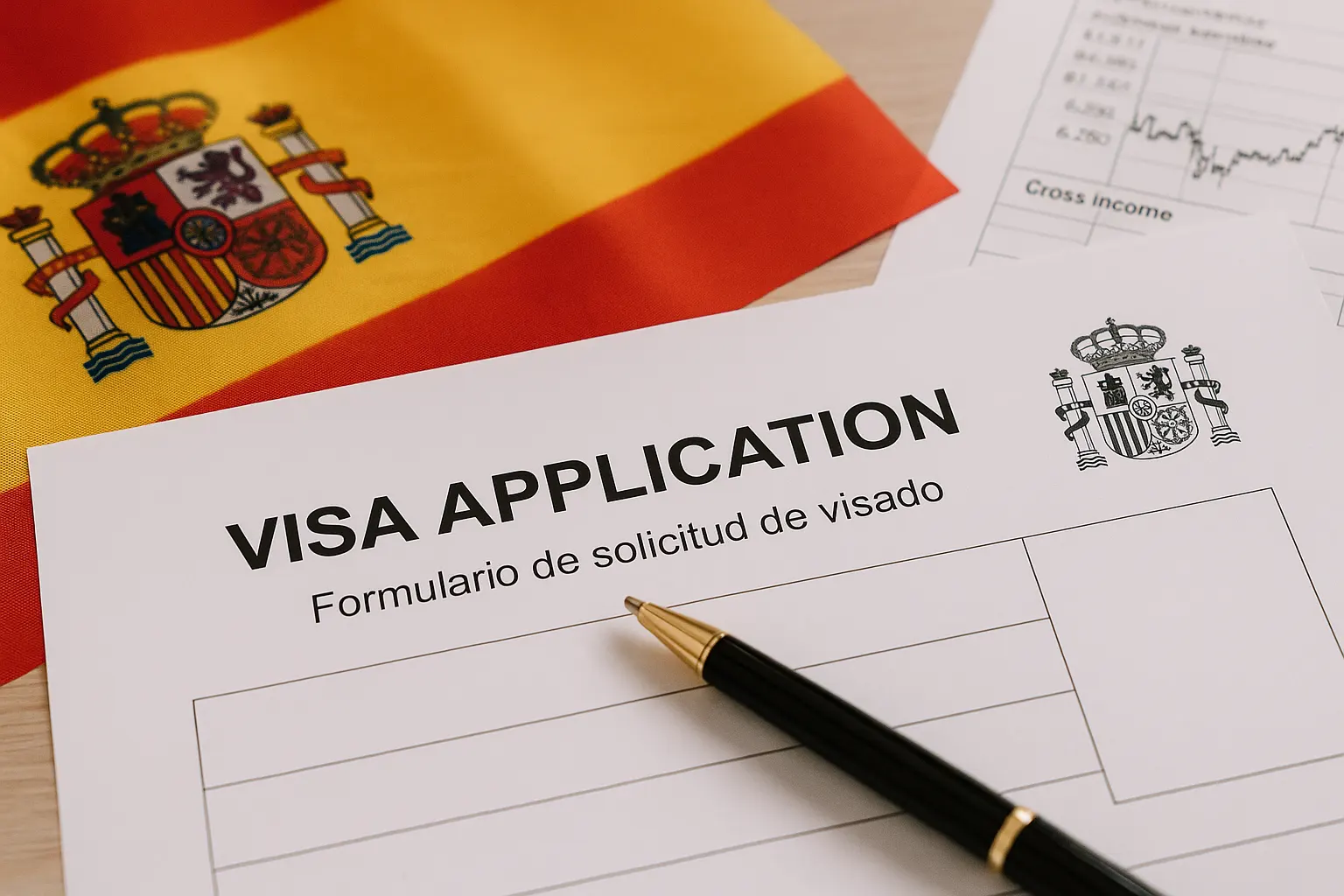


Spain offers multiple pathways for remote workers and freelancers looking to live and work legally within its borders. Two prominent options are the Spain autónomo visa (self-employment visa) and the Spain digital nomad visa (remote work visa Spain). Both cater to different target audiences with distinct legal and financial frameworks.
Understanding the Visas
1. Autónomo Visa Spain
The Autónomo Visa Spain is designed for individuals who plan to operate as self-employed professionals or entrepreneurs with a local client base or business activities within Spain.
2. Digital Nomad Visa Spain
The Digital Nomad Visa Spain targets non-EU nationals employed remotely by foreign companies or clients, allowing them to reside in Spain without engaging in local economic activities.
Key Differences Between the Visas
Here are some key differences between the two visas:
- Income Sources: Autónomos rely predominantly on Spanish or local clients, while digital nomads earn income abroad.
- Tax Obligations: Autónomos pay social security contributions monthly and file quarterly VAT declarations; digital nomads benefit from favorable tax regimes such as a flat 15% rate on foreign-earned income under special provisions.
- Registration Processes: Autónomos must register as self-employed with Spanish authorities, whereas digital nomad visa holders avoid self-employment registration unless residing over six months annually.
Advantages and Disadvantages of Each Visa
Here are the advantages and disadvantages of each visa:
- Autónomo status provides flexibility for building a Spanish-based business but involves higher administrative burdens and ongoing social security costs.
- Digital nomad visa offers simplified taxation and fewer local compliance requirements, yet limits engagement with the domestic market.
Making Your Decision
Choosing between these options depends largely on your work structure, client location, and long-term residency plans.
Introduction
Spain has become a preferred destination for remote workers and freelancers seeking a vibrant lifestyle combined with favorable living conditions. The country’s appeal extends to diverse professionals attracted by its rich culture, climate, and relatively affordable cost of living.
There are two main visa options available for this growing group:
- Autónomo visa Spain: Designed for freelancers or self-employed individuals intending to establish themselves locally with a Spanish business registration.
- Spain digital nomad visa: Tailored for non-EU nationals who work remotely for foreign clients or companies, such as a US company, without the need to register as self-employed in Spain.
Understanding these options is essential. Each visa type addresses different professional circumstances, income sources, and regulatory obligations. This article aims to clarify the distinctions between the freelance visa Spain (autónomo status) and the digital nomad visa, guiding readers towards the most appropriate route based on their specific needs and work models.
Understanding the Spain Autónomo Status
The autónomo visa Spain or self-employment visa is a common route for freelancers and entrepreneurs wishing to establish themselves independently in Spain. Often referred to as the freelancer visa Spain or self-employed visa Spain, this status requires meeting specific criteria and completing administrative steps that distinguish it from other visa types, such as the digital nomad visa.
Requirements for Becoming an Autónomo in Spain
To register as an autónomo, applicants must provide a set of documents demonstrating their eligibility and intent to engage in self-employed activity within Spain. These include:
- Valid residence permit or appropriate visa: Non-EU nationals must hold a residence permit that allows self-employment or apply for a specific self-employed work visa beforehand.
- Proof of identity: Passport or national ID card.
- Social Security registration: Registration with the Spanish social security system is mandatory before starting work as an autónomo.
- Tax identification number (NIE): The Número de Identificación de Extranjero, essential for tax and legal transactions.
- Business plan or freelance activity evidence: In many cases, especially for non-EU nationals applying from abroad, submission of a viable business plan is necessary. This plan should outline the nature of the freelance activity, expected income, target market, and how the business will be sustainable.
- Professional licenses or qualifications: Required if the freelance work involves regulated professions.
- Financial proof: Evidence of sufficient financial means to support oneself during initial months may be requested.
These requirements reflect the stringent framework governing self-employment under the autónomo status. While EU citizens benefit from simplified procedures due to freedom of movement rights, non-EU nationals face more complex application processes.
Registering as an autónomo entails formal declaration of business activity with Spanish tax authorities (Agencia Tributaria) and enrollment in the special social security regime for self-employed workers (Régimen Especial de Trabajadores Autónomos – RETA). The distinction between being simply on a freelancer visa versus actively registering as autónomo lies in these legal and fiscal obligations.
Understanding these nuances becomes critical when comparing options such as the Spain autónomo vs digital nomad visa pathways. The autónomo status requires direct involvement in managing one’s business locally—handling invoicing, VAT declarations, and social security contributions regardless of income fluctuations.
This pathway suits individuals planning long-term establishment with clients based in Spain or intending to build a local professional presence. It differs notably from digital nomad arrangements where remote work for foreign companies predominates without requiring local tax registration beyond specific limits.
Obligations & Responsibilities as an Autónomo in Spain
Being an autónomo in Spain means operating as a self-employed individual, a status available to both EU and non-EU nationals who meet the necessary legal requirements. This designation allows freelancers and entrepreneurs to provide services or sell products independently, working with clients both within Spain and internationally.
Key registration steps include:
- Obtaining a Número de Identificación de Extranjero (NIE), the tax identification number essential for all fiscal activities.
- Registering with the Spanish Tax Agency (Agencia Tributaria) to declare income and comply with tax obligations.
- Enrolling in the Social Security system under the autónomo regime, which triggers monthly contribution responsibilities.
Financial obligations under autónomo status encompass:
- Monthly social security contributions, which are mandatory regardless of income level. These payments secure access to healthcare, pensions, and other social benefits but represent a fixed cost that must be budgeted for by all self-employed individuals.
- Quarterly VAT (IVA) filings, applicable if the business activity involves taxable sales or services. Autónomos are responsible for submitting these declarations every three months to account for VAT collected from clients minus VAT paid on expenses.
Benefits of holding autónomo status include freedom to work without client restrictions and eligibility for Spanish social benefits. This contrasts with visa types limiting local business engagement or imposing different tax treatments, positioning autónomo as a versatile option for those seeking full integration into Spain’s economic framework.
This framework shapes the practical realities behind keywords such as autónomo visa spain, self employment visa spain, freelance visa requirements spain, and spain autónomo vs digital nomad visa. Understanding these obligations is crucial before deciding which pathway best fits individual professional and financial goals.
Exploring the Digital Nomad Visa in Spain
The digital nomad visa in Spain was introduced in January 2023 to cater specifically to non-EU nationals who work remotely for foreign companies or clients. This visa addresses the growing demand among global remote workers seeking legal residence while maintaining their international employment status.
Key Eligibility Criteria for the Digital Nomad Visa Spain
Applicants must satisfy specific requirements to qualify for this remote work visa Spain:
- Employment Status: Must be employed by a company registered outside Spain or engaged as a freelancer with clients outside Spain.
- Minimum Income: Demonstrate a gross monthly income of at least €2,800 (or equivalent), ensuring financial stability during the stay.
- Health Insurance: Provide proof of valid health insurance coverage within Spain throughout the visa period.
- Background Checks: Submit a clean criminal record certificate from the country of origin or residence.
- Contract and Remote Work Proof: Evidence of an ongoing remote working relationship, such as an employment contract or service agreements with foreign clients.
These conditions are outlined on the official portals like the Spain digital nomad visa official website, offering detailed guidance on documentation and application procedures.
Benefits of Obtaining a Digital Nomad Visa in Spain
This visa provides several advantages tailored to remote professionals:
- Tax Advantages: One of the most attractive features is eligibility for a special flat tax rate of 15% on income earned abroad. This benefit falls under special provisions similar to those found in the Beckham Law, designed to attract foreign talent by reducing tax burdens.
- No Mandatory Social Security Registration: Unlike autónomos, digital nomad visa holders are not required to register as self-employed or pay into Spanish social security systems unless they become tax residents by residing more than six months per year in Spain.
- Simplified Residency Process: The visa offers legal recognition and residency rights without stringent obligations related to business registration or local taxation complexities that autónomos face.
- Flexibility for Remote Workers: Ideal for professionals whose income sources remain outside Spain, enabling them to enjoy Spanish lifestyle benefits without engaging in local economic activities requiring autónomo status.
What the Digital Nomad Visa Does Not Require
- Registration as self-employed (autónomo) during the initial period.
- Payment of Spanish social security contributions unless residency surpasses six months annually.
This stands in contrast to the Spain autónomo vs digital nomad visa scenario where autónomos have ongoing fiscal and administrative responsibilities linked to local business operations.
The digital nomad visa spain requirements focus on supporting global mobility while keeping administrative hurdles manageable. This approach aligns with Spain’s efforts to become a hub for international remote professionals seeking long-term stays without traditional employment constraints.
Remote workers and freelancers evaluating options between traditional Spain freelancer visa pathways and this new digital nomad category will find clear distinctions in tax treatment, registration obligations, and flexibility.
NIM Immigration Lawyers provide expert assistance navigating these nuances, ensuring applicants meet all criteria laid out under Spanish nomad visa regulations and maximize benefits offered by the digital nomad framework.
Comparing Autónomos Status and Digital Nomad Visa Side by Side
| Feature | Autónomo Status | Digital Nomad Visa |
| Target Applicants | Freelancers or entrepreneurs working locally | Remote workers employed by foreign companies |
| Income Source Restrictions | Income can be from local or foreign clients | Must work remotely for non-Spanish entities |
| Taxation Model | Standard progressive tax rates; VAT applies | Flat 15% tax on foreign income under Beckham Law provisions |
| Social Security Contributions | Mandatory monthly payments regardless of income | Not required unless resident over 183 days |
| Registration Complexity | Requires registration with tax authorities and social security system; involves paperwork and ongoing declarations | Application process streamlined, mainly online, with proof of income and insurance required |
| Residency Duration | No specific visa; tied to residence permit status and autónomo registration | Valid for up to one year, renewable up to five years |
This comparison between autónomos and digital nomads in Spain highlights key operational differences. Autónomos must navigate complex registration and ongoing fiscal obligations linked to local business activities. The digital nomad visa simplifies compliance for remote workers with foreign income, offering significant tax benefits but limiting local client engagement. Choosing between these depends on your professional setup and residency plans in Spain.
Choosing Between Autónomos Status and Digital Nomad Visa Based on Your Situation
Selecting between the autónomo status and the digital nomad visa in Spain depends largely on your professional setup and long-term goals. The decision requires careful consideration of your client base, income sources, tax implications, and residency plans.
When to Choose Autónomo Status
Choose the autónomo status if:
- You have a significant local client base or plan to work regularly with Spanish companies.
- Your activity involves local invoicing, requiring registration as self-employed under Spanish law.
- You prefer to integrate fully into the Spanish social security system, gaining access to benefits such as healthcare and pensions.
- You are prepared to handle quarterly VAT declarations and monthly social security contributions regardless of income fluctuations.
- Your business model demands direct contact with local authorities or clients, making autónomo registration necessary.
When to Opt for the Digital Nomad Visa
Opt for the digital nomad visa if:
- Your clients or employer are primarily based outside Spain, allowing you to maintain foreign-source income.
- You seek to benefit from a favorable flat tax rate of 15% on income earned abroad under special provisions like the Beckham Law.
- Avoiding the administrative burden of becoming self-employed in Spain is a priority.
- You want flexibility without mandatory social security contributions linked to autónomo status unless you become a resident exceeding six months per year.
- Health insurance coverage valid in Spain is secured independently.
Choosing between autónomo and digital nomad Spain options hinges on where your income originates, how much involvement you want with local tax and social systems, and your residency intentions.
Understanding these factors streamlines your decision-making process, aligning visa status with professional needs while optimizing fiscal obligations.
How NIM Immigration Lawyers Can Help You With Your Application Process?
NIM Immigration Lawyers specialize in helping freelancers and remote workers navigate Spain’s visa options, particularly those considering the Spain autónomo vs digital nomad visa choices. Their extensive knowledge allows them to provide personalized advice tailored to each client’s specific situation.
Key services include:
- Comprehensive Case Analysis
- Detailed assessment of personal circumstances to identify the most suitable visa pathway, whether registering as an autónomo or applying for the digital nomad visa.
- End-to-End Documentation Management
- Handling all paperwork electronically through a streamlined online platform, eliminating the need for physical appointments and reducing processing delays.
- Expert Navigation of Registration Processes
- Assistance with autónomo registration requirements such as social security affiliation and tax obligations, as well as meeting digital nomad visa criteria like income verification and insurance coverage.
- Personalized Support Throughout
- Each client receives attentive service focused on transparency, trust, and efficiency. Competitive pricing models make professional immigration advice accessible without compromising quality.
Choosing between immigration lawyers Spain digital nomads can significantly influence the success and timeliness of your application. NIM’s dedicated team leverages their knowledge of both visa types to simplify complex legal procedures, ensuring clients are well-prepared to establish their working life in Spain.