

Executive Summary
Spain’s social security benefits include various protections such as healthcare, pensions, unemployment support, and disability coverage. The system relies on mandatory contributions from both employees and employers to ensure comprehensive social safety nets.
Key figures highlight the financial commitments required:
- Employee contributions: Approximately 6.35% of gross wages.
- Employer contributions: Around 29.9% of employee wages.
Pension eligibility in Spain requires significant contribution periods. To qualify for a full retirement pension, individuals must have contributed for at least 37 years by 2027. However, the system does allow for minimum pension access with a contribution history of 15 years.
Unemployment benefits depend on prior contributions and are generally available for up to four months. This duration is shorter compared to some other developed systems but reflects Spain’s focus on targeted, contributory-based assistance.
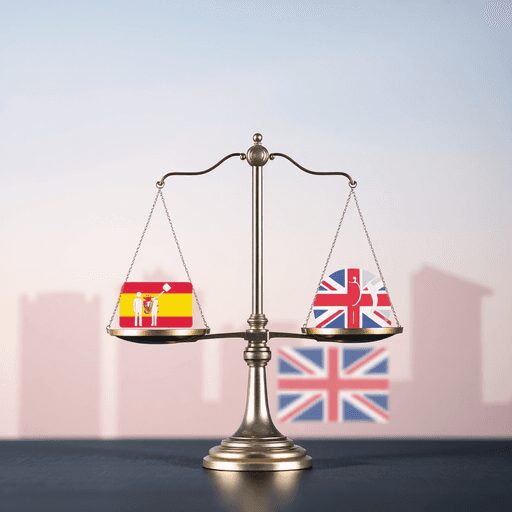
When compared to the social security systems in the UK and US, Spain stands out for its wider coverage across healthcare and social benefits. However, this comes with trade-offs such as longer required contribution periods and higher overall rates.
This comparison helps us understand how Spain’s system balances generosity with sustainability—and what it means for residents and expats navigating social security benefits in Spain today.
Introduction
Understanding social security benefits can be difficult, especially when considering moving to another country or working internationally. It’s important to know how different countries organize their social security systems so that we can make informed choices about healthcare, retirement, unemployment support, and disability coverage.
This article provides an overview of social security benefits in Spain and compares them with the systems in the United Kingdom and the United States. By understanding the specific features, eligibility requirements, and contribution obligations in each country, we can identify key differences that affect both residents and expatriates.
Some of the main questions we will explore are:
- How does Spain’s social security system work in terms of coverage and funding?
- What are the eligibility criteria for important benefits such as pensions and unemployment aid?
- How do Spain’s social security benefits differ from those in the UK and US in terms of scope, costs, and duration?
By looking at these topics in detail through a comparison of social security systems in Spain, the UK, and the US, we can gain a better understanding of which systems offer more comprehensive protection, which ones require higher contributions, and how these factors impact personal financial planning. This information is particularly useful for expats who are considering living or working in Spain or exploring options across these three countries.
Understanding Social Security Benefits in Spain
The Spanish social protection system operates as a mandatory framework, firmly established by the Spanish Constitution under Article 41. It is designed to guarantee a basic level of welfare for all residents through a series of interconnected benefits. These benefits cover critical areas of social security:
- Healthcare: Universal access to both primary and hospital care services.
- Pensions: Includes contributory pensions based on employment contributions and non-contributory pensions intended for those without sufficient contribution history.
- Unemployment Aid: Financial support available for those who lose their jobs, subject to contribution requirements.
- Disability Support: Assistance ranging from partial disability benefits to full coverage for severe disabilities.
- Maternity/Paternity Leave: Paid leave entitlements protecting income during childbirth or adoption.
- Assistance for Senior Citizens: Additional support programs aimed at improving quality of life for older adults.
Funding these extensive benefits relies on a tripartite contribution system involving employees, employers, and self-employed individuals. Each group contributes a percentage of wages or declared income into the social security fund. Employer contributions in Spain tend to be notably higher compared to employee contributions. This funding structure not only sustains the current benefit payouts but also supports the long-term viability of the system.
The mandatory nature of contributions ensures broad participation across the workforce, which underpins the system’s comprehensive coverage. Self-employed workers have specific contribution schemes adapted to their variable incomes, reinforcing inclusivity within the Spanish social protection network.
This well-defined structure allows Spain’s social security framework to address multiple life contingencies comprehensively, setting it apart in terms of scope and legal grounding from many other countries’ systems. Understanding how these benefits are structured and financed is essential for anyone considering living or working in Spain.
Key Features of Spanish Social Security System
The Spanish social security system delivers a broad array of benefits designed to protect contributors and their families across various life circumstances. These benefits encompass healthcare, pensions, unemployment aid, disability support, and more.
Spanish Healthcare Coverage
Every individual contributing to the system gains access to comprehensive healthcare services without additional insurance premiums.
Coverage includes general practitioner consultations, specialist medical attention, emergency care, and hospital stays.
Medication prescribed by healthcare professionals is subsidized under the public health framework.
Prenatal, childbirth, and postnatal services are fully supported within the healthcare coverage.
This extensive Spanish healthcare coverage ensures that contributors receive quality medical assistance throughout their lives, reinforcing social protection beyond employment.
Spanish Pension System
Pensions in Spain fall into several categories tailored to different needs:
- Retirement Pensions:
- Minimum Retirement Pension: Available to those meeting the minimum contribution period (currently 15 years) but who have not reached full eligibility requirements.
- Full Retirement Pension: Granted when individuals accumulate at least 37 years of contributions by 2027; this pension reflects a higher benefit amount based on lifetime earnings.
- Disability Pensions:
- Range from partial disability (allowing some work capacity) to severe or absolute disability where work is impossible.
- Benefits vary according to the level of disability assessed by medical boards.
- Survivor Pensions:
- Provided to eligible family members such as widows/widowers, orphans, and dependent relatives after a contributor’s death.
Each pension type requires specific contribution histories and medical certification when applicable. The system balances generosity with sustainability by linking benefits closely to prior contributions.
Unemployment Benefits Spain
Unemployment support serves as a safety net for workers facing involuntary job loss:
- Eligibility Requirements: A minimum of one year (360 days) of prior contributions during the last six years before becoming unemployed is mandatory.
- Duration of Benefits: Typically granted for up to four months but can extend depending on total contribution time.
- Benefit Calculation: The amount depends on the applicant’s average salary during the preceding contribution period. Payments start at approximately 70% of the average salary for the first six months, decreasing thereafter.
Strict conditions apply—claimants must actively seek employment and be registered with public employment services. This design encourages rapid reintegration into the labor market while providing temporary financial relief.
The mix of generous healthcare provisions, a multi-tiered pension system, and structured unemployment benefits forms a core foundation of Spain’s social security framework. Understanding these key features helps clarify what social security benefits in Spain truly offer compared to other countries.
Comparative Analysis: Social Security Benefits in Spain vs UK vs US
The social security coverage comparison Spain UK US reveals distinct approaches to healthcare, retirement pensions, and unemployment support. The following table summarizes key differences and similarities in these core benefit areas:
|
Benefit Type |
Spain |
United Kingdom |
United States |
|
Healthcare |
Universal public healthcare funded by social security contributions. Covers primary care, hospital care, specialist treatments without direct charges for contributors. |
National Health Service (NHS) provides free healthcare at point of use funded through general taxation; covers wide range of services including emergency care and long-term treatments. |
No universal system; Medicare for seniors (65+), Medicaid for low-income individuals; majority must rely on private insurance or employer-sponsored health plans. |
|
Retirement Pensions |
Requires minimum 15 years contributions; full pension after 37 years by 2027; contributory pensions based on salary history; non-contributory pensions available for vulnerable groups. |
Basic State Pension plus additional State Pension schemes; eligibility usually requires 10 years National Insurance contributions; pension amount related to contribution record. |
Social Security benefits based on work credits (40 quarters or ~10 years); benefits calculated from highest 35 years earnings; no guaranteed minimum beyond Supplemental Security Income for low-income elderly. |
|
Unemployment Support |
Eligibility requires at least 1 year of prior contributions; benefits last up to 4 months, typically around 70% of average wage initially, tapering over time. |
Jobseeker’s Allowance available with qualifying National Insurance contributions; duration up to 6 months for contribution-based benefits, extended means-tested options may apply. |
Unemployment Insurance varies state-by-state with federal guidelines; typically provides up to 26 weeks benefits based on previous earnings subject to state limits. |
|
Disability Benefits |
Multiple tiers from partial to severe disability with corresponding pension amounts; strict medical assessments determine eligibility and severity level. |
Personal Independence Payment (PIP) and Employment Support Allowance (ESA) available after medical assessment; tiered benefits depending on severity and capacity to work. |
Social Security Disability Insurance (SSDI) requires work credits and proof inability to perform substantial gainful activity due to disability; Supplemental Security Income (SSI) offers means-tested aid. |
Notable Differences
- Healthcare Access: Spain and the UK provide comprehensive universal healthcare largely free at the point of service, contrasting sharply with the US where access is fragmented and highly dependent on insurance status.
- Contribution Requirements: Spain demands longer contribution periods for full retirement benefits compared to the UK’s lower threshold and the US’s credit system that emphasizes work quarters.
- Unemployment Duration: The US generally offers longer unemployment benefit periods than Spain and the UK, although actual duration depends on state-specific rules in the US.
- Disability Assessment: All three systems implement stringent medical evaluations but differ in categorizing severity and linking it to benefit levels or types.
Spain’s system emphasizes broad coverage with mandatory contributions ensuring access across multiple social contingencies, while
Strengths and Limitations of Spanish Social Security Benefits System
The Spanish social security system has some notable strengths that make it a strong safety net for residents and workers. These advantages contribute to its reputation as one of the most comprehensive systems in Europe.
Strengths of the Spanish Social Security System
1. Extensive Healthcare Access
Healthcare coverage under Spain’s social security is universal for contributors, offering primary care, specialist consultations, hospital services, and emergency treatments without additional insurance premiums. This inclusive approach reduces out-of-pocket expenses, enhancing access to quality medical care across the population.
2. Broad Range of Covered Contingencies
Beyond retirement pensions, the system provides financial support for multiple life events:
- Disability benefits range from partial to severe impairments, ensuring income continuation tailored to the individual’s capacity.
- Maternity and paternity leave guarantees paid time off for new parents, promoting family welfare and gender equality at work as highlighted in CEDAW.
- Unemployment aid, although limited in duration, offers temporary relief during job transitions.
- Assistance programs for senior citizens help those with limited resources maintain dignity and quality of life.
3. Legal Foundation and Stability
Spain’s constitution enshrines social security rights (Article 41), reflecting a societal commitment to social protection backed by a structured legal framework. This creates predictability and confidence for contributors over the long term.
Limitations of the Spanish Social Security System
1. High Contribution Rates
Employers face contribution rates approximating 29.9% of wages, while employees contribute around 6.35%. Self-employed persons also encounter significant charges based on their declared income. This financial burden can discourage formal employment or business growth, particularly impacting small enterprises and startups.
2. Relatively Short Unemployment Benefit Duration
Unemployment assistance generally lasts up to four months, provided eligibility criteria such as minimum contribution periods are met. Compared with other nations where unemployment benefits may extend longer or be more flexible, this limitation can leave job seekers vulnerable during extended periods without work.
3. Strict Eligibility Requirements
Accessing full retirement pensions requires lengthy contribution histories—37 years by 2027—which may challenge workers with intermittent employment or career breaks. Similarly, qualifying for unemployment or disability benefits demands meeting specific contribution thresholds that some individuals might find difficult due to irregular work patterns or informal sectors.
4. Limited Coverage Gaps for Certain Groups
While broad in scope, certain groups like undocumented workers or those outside formal employment schemes may find themselves excluded from full benefit access. This gap highlights ongoing challenges in ensuring equitable coverage across all segments of society.
The strengths emphasize Spain’s commitment to comprehensive social welfare that covers health, family support, disability, and retirement needs extensively. The limitations highlight financial pressures on employers and workers alongside some restrictive eligibility rules that require careful navigation by contributors.
Understanding these aspects helps expats and future residents weigh how Spain’s social security system aligns with their personal circumstances and expectations before making relocation decisions or planning careers within the country.
Practical Implications for Expats Considering Moving to Spain
Navigating the social security benefits in Spain involves more than just understanding the system itself. For expats, knowing how contribution requirements affect eligibility is crucial to securing the right coverage and benefits.
Key Considerations for Expats
1. Contribution Periods Matter
Spain requires a minimum contribution period to access full benefits, especially for pensions and unemployment aid. Without sufficient contributions, entitlements may be limited or unavailable.
2. Employer vs. Employee Contributions
Both employees and employers contribute significantly, with employers shouldering nearly 30% of wages. Self-employed individuals must also comply with mandatory payments, affecting financial planning.
3. Residency Status and Social Security Rights
Residency permits can influence access to social security benefits. Holding the correct visa or residency card ensures uninterrupted coverage and eligibility.
Resources for Expats: Simplifying Complexity
Digital platforms like NIM Immigration Lawyers provide tailored guidance for expats on how residency status intersects with social security rights in Spain, UK, and US contexts.
- Online Consultations: Personalized legal advice can clarify which contributions count toward benefits and how to navigate complex eligibility rules.
- Visa and Permit Assistance: Expert support with Digital Nomad Visas, work permits, and residency applications helps align immigration status with social security entitlements.
- Comprehensive Case Analysis: Understanding personal circumstances—including employment type and duration of stay—enables strategic planning for maximizing benefit access.
“Before relocating, I consulted NIM Immigration Lawyers online to understand my social security rights in Spain compared to the UK. Their clear explanations helped me prepare financially and legally.” – Client Testimonial
Why This Matters
Expatriates often compare social security rights Spain UK US when deciding where to live or work internationally. Spain’s comprehensive system offers strong protections but demands longer contributions than some other countries. Aligning your move with these requirements protects against unexpected gaps in coverage.
Awareness of contribution thresholds, benefit scopes, and residency implications reduces risks. Early preparation supports smoother transitions into Spain’s social security framework and ensures you can fully benefit from its healthcare, pensions, unemployment support, and more.
Understanding these practical factors helps expatriates make informed decisions about relocation, employment contracts, and long-term financial security within the Spanish social security landscape.
Conclusion
Evaluating Spanish social security benefits requires a clear understanding of both its strengths and limitations. Spain’s system offers comprehensive coverage that includes healthcare, pensions, disability support, and family-related benefits—all backed by mandatory contributions from employees and employers. This broad scope ensures a high level of social protection for residents.
Key factors to consider when assessing social security benefits in Spain:
- Extensive healthcare access with no additional insurance costs for contributors
- Diverse pension schemes catering to retirement, disability, and survivors
- Support during unemployment, albeit with relatively short benefit durations
- Higher contribution rates compared to some other countries, which may impact employers and the self-employed
The Spanish model contrasts with systems in the UK and US, where contribution requirements and benefit scopes differ significantly. While Spain demands longer contribution periods for full entitlements, it compensates with wider coverage for various life contingencies.
Choosing to relocate or work internationally involves weighing these aspects carefully. Individual circumstances such as career plans, length of stay, and eligibility for specific benefits will shape how valuable Spain’s social security system is on a personal level.
“Social security is not one-size-fits-all. What works well for one person may not suit another.”
Seeking personalized advice can clarify how Spain’s social security system fits your unique situation. Trusted experts like NIM Immigration Lawyers offer guidance tailored to expats navigating residency permits and social security rights, helping you make informed decisions.
Taking time to research and assess your options ensures confidence when considering Spain as your new home or workplace. The advantages offered by Spanish social security benefits have strong appeal but must be balanced against contribution obligations and individual needs.
Your journey toward understanding social security benefits in Spain can start today with thorough evaluation and expert support—paving the way for a secure future abroad.
FAQs (Frequently Asked Questions)
What social security benefits are available in Spain?
Spain’s social security system provides comprehensive benefits including healthcare coverage, retirement pensions (both contributory and non-contributory), unemployment aid, disability support, maternity/paternity leave, and assistance for senior citizens. These benefits are funded through mandatory contributions from employees, employers, and self-employed individuals.
How do contribution rates for social security in Spain compare to the UK and US?
In Spain, employee contributions are approximately 6.35% of wages while employer contributions are around 29.9%. Compared to the UK and US, Spain demands higher contribution rates but offers broader coverage across various social security benefits.
What are the eligibility requirements for retirement pensions in Spain?
To qualify for a full retirement pension in Spain, individuals must have contributed to the social security system for at least 37 years by 2027. The minimum contribution period required to receive any retirement pension is 15 years.
How long do unemployment benefits last in Spain and what are the eligibility criteria?
Unemployment benefits in Spain typically require at least one year of prior contributions to be eligible. The duration of these benefits is usually limited to four months, with amounts calculated based on the individual’s average salary during their contribution period.
What should expats consider regarding social security when moving to Spain?
Expats should understand the contribution requirements thoroughly before relocating to ensure they qualify for proper entitlements under the Spanish social security system. Utilizing resources like digital platforms or consulting with experts such as NIM Immigration Lawyers can help navigate residency permits and their impact on social security rights effectively.
What are some strengths and limitations of the Spanish social security system?
Strengths of Spain’s social security system include extensive healthcare access for all contributors without additional insurance costs and a broad range of covered contingencies such as disability and maternity/paternity support. Limitations involve high contribution rates that can burden employers and self-employed individuals, as well as relatively short-term unemployment assistance with strict eligibility conditions.