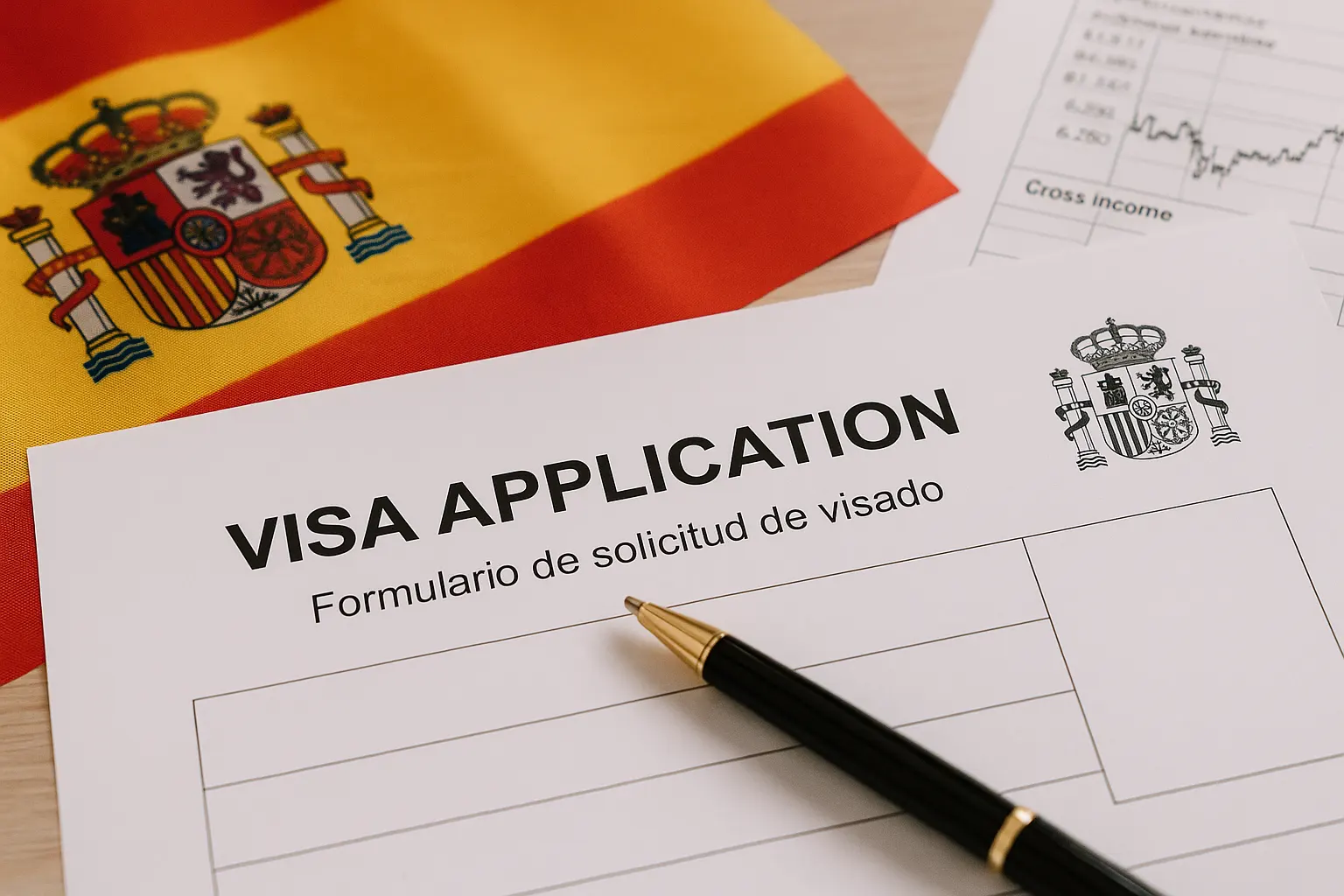


Embarking on the Spanish Dream: Your 2026 Guide to the Digital Nomad Visa from Australia
For many Australians, the allure of Spain – its vibrant culture, rich history, and laid-back lifestyle – offers an irresistible contrast to life down under. The Spanish Digital Nomad Visa (DNV), launched to attract remote workers and freelancers, presents a golden opportunity to make that dream a reality in 2026. This comprehensive guide moves beyond the basic application process, focusing specifically on the unique journey for Australian prospective nomads. We assume you’re already familiar with the general DNV framework and are now seeking the granular details on how to get a nomad visa in Spain when applying from Australia, and what lies beyond the visa stamp to truly establish life in España.
Our focus is on equipping you with the strategic insights and practical steps needed to navigate the administrative hurdles unique to Australian applicants during 2026, from document legalisation to settling into your new Spanish home. We’ll delve into the specifics of making this transition as seamless as possible, ensuring your Australian Digital Nomad Spain 2026 adventure begins on solid footing.
TL;DR: The Essentials for Australian Nomads in Spain (2026)
Securing the Spain DNV Australia 2026 requires meticulous preparation tailored to the Australian context. Key considerations include:
-
Document Legalisation: Australian documents must undergo specific apostille and legalisation processes via DFAT.
-
Accredited Translation: All non-English documents (or English documents requiring translation for consulates) need translation by a NAATI-accredited professional.
-
Consulate Engagement: Direct engagement with a Spanish Consulate in Australia is essential for submitting your initial application.
-
Financial Proof: Demonstrate sufficient funds, typically 200% of the minimum wage (IPREM) in 2026, for the main applicant, plus additional for dependents.
-
Health Insurance: Obtain comprehensive private health insurance valid in Spain for the duration of your stay, without co-payments.
-
Residency Formalities: Post-arrival, essential steps include registering your address (empadronamiento), obtaining your Foreigner Identity Card (TIE), and setting up local services.
Understanding these Digital Nomad visa requirements Australia-specific points is crucial for a successful application and smooth transition.
Beyond the Basics: Navigating the Spanish Digital Nomad Visa from Down Under
While the core requirements for the Spanish DNV apply globally, Australian applicants face specific challenges and processes. This section illuminates those nuances, moving several steps beyond the generic checklist to address how to get a nomad visa in Spain when your starting point is Australia, ensuring a smoother Spain DNV application Australia experience.
The Australian Apostille Puzzle: Document Certification for Spain 2026
A critical step for Australian citizens applying for any long-stay visa in Spain, including the DNV, is the proper legalisation of documents through the apostille process. This certifies the authenticity of signatures and seals on Australian public documents for use internationally under the Hague Convention. For 2026, this process remains vital.
The Department of Foreign Affairs and Trade (DFAT) is the sole authority in Australia for issuing apostilles. Documents such as your police check (National Police Certificate), birth certificate, marriage certificate (if applicable for dependents), and university degrees (if relevant to your profession) will likely require an apostille. It is essential to ensure your documents are current and correctly prepared before submitting them to DFAT for certification.
The process generally involves sending your original documents to a DFAT office or presenting them in person at a passport office that offers apostille services. Check the DFAT website for the most up-to-date procedures, required fees in AUD, and processing times for 2026, as these can fluctuate. Any original document not obtained directly from a government body may first need to be formally witnessed or notarised by an Australian public notary before DFAT can affix an apostille. Rushing this step or submitting incorrect documents can significantly delay your Spain DNV application Australia.
Translating Your Dreams: Accredited Spanish Translation Services in Australia
For your Spanish Digital Nomad Visa application, any official Australian document not originally in Spanish must be translated by an accredited translator. For Australians, this almost exclusively means using a translator accredited by the National Accreditation Authority for Translators and Interpreters (NAATI).
NAATI accreditation is the gold standard in Australia, ensuring that translations are accurate, legally recognised, and meet the high standards required by the Spanish authorities. When sourcing an accredited Spanish translation Australia service, verify their current NAATI accreditation. This is crucial for documents like your police check, bank statements (if needed in Spanish), and any educational or professional certificates that the consulate may request in Spanish.
While some Spanish consulates might accept English documents for certain purposes, it’s safer and often required to provide sworn, NAATI-accredited translations for all essential documents. Always confirm the specific requirements with your designated Spanish Consulate in Australia before incurring translation costs. Look for translators specialising in legal or official documents to ensure precision and compliance with Spanish bureaucratic norms.
The Sydney/Melbourne/Canberra Connection: Engaging with Spanish Consulates in Australia (2026)
Your primary point of contact for the initial DNV application in Australia will be one of the Spanish Consulates or the Embassy of Spain, depending on your state of residence. In 2026, the key locations for obtaining Spanish consulate services Australia are:
-
Embassy of Spain in Canberra: Serves residents of the Australian Capital Territory, Queensland, and Tasmania.
-
Consulate General of Spain in Sydney: Primarily for New South Wales, the Northern Territory, and South Australia.
-
Consulate General of Spain in Melbourne: Covers Victoria and Western Australia.
It is imperative to check which consulate has jurisdiction over your residential address, as applications must be submitted to the correct office. The application process typically involves booking an appointment online well in advance, as slots can be limited. For your Spain DNV interview Australia, expect to present all original and translated documents, passport, application forms, and fulfil biometrics. Be prepared to discuss your remote work arrangements and financial solvency.
Consulate websites are updated regularly with specific appointment procedures, required documentation, and fees (payable in AUD). Due to high demand in 2026, maintaining regular communication and promptly responding to any consulate requests for additional information is key to a smooth application process. Understand that the Spanish DNV interview Australia might be more of a document submission and verification process than a formal interview.
From Visa Approval to Vibrant Spanish Life: Your Post-Arrival Blueprint 2026
Congratulations, your DNV is approved! But the journey doesn’t end there. Successfully establishing your life in Spain means navigating several post-arrival administrative steps unique to non-EU residents. This section details what to expect after your visa is stamped, focusing on how to get a nomad visa in Spain to full residency, and then settling in Spain 2026 as an Australian.
The Real Cost of Living: Budgeting for an Aussie Digital Nomad in Spain (2026)
Understanding the financial landscape is paramount for any Australian relocating to Spain. While Spain generally offers a lower cost of living than major Australian cities, careful budgeting in AUD is essential. This includes not just daily expenses but also initial setup costs.
Initial Setup Costs:
-
Visa Application Fee: Approximately 150-200 AUD (check current consulate fees).
-
Apostille & Translations: Can range from 300-800 AUD depending on the number of documents and translator rates.
-
Health Insurance: Expect to pay between 800-1,500 AUD annually for comprehensive private health insurance for non-EU residents in Spain.
-
Flights: A major expense, fluctuating widely based on season and booking time.
-
Accommodation Deposit: Typically 1-2 months’ rent, plus agency fees (if applicable).
-
Initial Living Expenses: Budget for at least 1,500-2,500 AUD for your first month for incidentals, groceries, and transport while you get set up.
Monthly Living Expenses (approximate, for a single person):
-
Rent: Varies significantly.
-
Madrid/Barcelona: 900-1,500 AUD for a one-bedroom apartment.
-
Valencia/Seville: 700-1,100 AUD.
-
Smaller cities/towns: 500-800 AUD.
-
-
Utilities (electricity, water, gas, internet): 150-250 AUD.
-
Groceries: 300-500 AUD.
-
Public Transport: 60-100 AUD (monthly pass).
-
Mobile Phone: 20-40 AUD.
-
Leisure/Eating Out: 200-500 AUD (highly variable).
The total cost of living Spain digital nomad for a single person in a major city could range from 1,800 to 3,000 AUD per month in 2026, excluding significant travel. Budgeting Spain 2026 AUD should also factor in the exchange rate, which can impact your spending power.
Healthcare & Home: Insuring Yourself and Finding Accommodation in Spain (2026)
Two critical components for your successful move are securing health coverage and a place to live. Navigating both as a non-EU citizen has specific requirements.
Health Insurance Spain Non-EU:
The Spanish DNV requires comprehensive private health insurance for non-EU individuals that covers all risks typically covered by the public health system, without co-payments (copago), and valid for your entire stay in Spain. Policies specifically designed for DNV applicants are now common. Major Spanish insurers like Sanitas, Adeslas, and DKV offer suitable plans. It’s advisable to purchase this insurance while still in Australia, as proof is required for your visa application.
Important points:
-
Ensure the policy is comprehensive and has no waiting periods or co-payments.
-
Confirm it’s valid throughout Spain.
-
Retain all policy documents in English and Spanish.
Once you gain residency and pay social security contributions, you may eventually be able to access the public health system, but your initial entry will depend on private insurance.
Finding Accommodation Spain 2026:
Securing accommodation often depends on your chosen city and budget. Popular platforms include Idealista, Fotocasa, and Piso.com. For short-term stays while you search, Airbnb or local rental groups on Facebook are useful. Consider these tips:
-
Start Early: Popular cities like Barcelona, Madrid, and Valencia have competitive rental markets.
-
Be Wary of Scams: Never pay a deposit without a signed contract and having viewed the property (or had a trusted person view it).
-
Leases: Standard rental contracts are usually for 11-12 months. Be prepared for a security deposit (often 1-2 months’ rent).
-
Documentation: You’ll need your DNI/NIE and potentially proof of income.
-
Consider a Short-Term Rental First: Many Australians prefer to book an Airbnb for the first few weeks to allow time to view properties in person and sign a long-term lease.
Exploring different Spanish regions cost comparison can help you decide where your budget will go furthest, with the southern regions generally offering more affordable housing than the major northern cities.
Strategic Choices: DNV vs. Other Long-Stay Visas for Australians in Spain (2026)
While the Digital Nomad Visa is an excellent pathway, Australians have other options for long-term stays in Spain. Understanding the digital nomad visa benefits Spain offers compared to alternatives is crucial for strategic decision-making in 2026.
-
Non-Lucrative Visa (NLV): For those who can demonstrate substantial passive income (not from Spanish-based work) and wish to live in Spain without working. The financial requirements are higher than the DNV. The key difference: you cannot work.
-
Student Visa: If your primary purpose is study, this visa allows you to pursue education in Spain and permits limited work hours.
-
Working Holiday Visa (WHV): For Australians aged 18-30, this visa allows an extended stay (typically one year) with the possibility of incidental work. However, it’s not designed for long-term residency and has age restrictions.
-
Golden Visa (Investor Visa): Requires a significant investment (e.g., 500,000 EUR in real estate) and offers residency, but is applicable to a very different demographic.
The Digital Nomad Visa benefits Spain offers are tailored specifically for remote workers, acknowledging their economic contribution without them entering the local labour market directly. It provides a clearer path to residency for those actively working remotely, unlike the NLV, and with better long-term prospects than a WHV. For 2026, the DNV stands out as the most direct route for Australians engaged in remote work.
A Day in the Life: Australian Digital Nomads Thriving in Spain (2026 Case Studies)
The theory is one thing; living the DNV dream in Spain is another. Here, we share anonymised accounts of Australian digital nomads who have successfully made the leap in early 2026, providing real-world insights into their journeys from initial application to finding their rhythm in Spanish cities. These Australian digital nomad stories Spain illustrate the challenges and rewards of this unique lifestyle.
Barcelona Buzz: A Freelancer’s Journey from Sydney to Catalonia
Meet “Chloe,” a 32-year-old graphic designer and content creator from Sydney. Chloe secured her DNV in March 2026 and settled in Barcelona.
“The apostille for my National Police Certificate was probably the trickiest bit back in Australia,” Chloe recounts. “Once that was sorted and translated by a NAATI legend, the consulate appointment actually went smoothly. I chose Barcelona for the creative scene and the co-working spaces, which are fantastic for a freelancer in Spain DNV like me.”
Chloe found a shared apartment in Gràcia initially, which significantly reduced her living costs. She works remotely for her Australian and international clients, often starting her day early to align with Australian time zones, then enjoying Barcelona’s vibrant evenings.
“The biggest challenge has been the language. I knew basic Spanish, but integrating really means pushing through. Joining local yoga classes and a Catalan language exchange has helped loads. I’ve found a great community of both locals and fellow expats. It’s a different pace, but the quality of life as an Australian in Barcelona 2026 is incredible.”
Seville’s Charms: A Remote Employee’s Transition to Andalusian Life
“Liam,” a 28-year-old software engineer working remotely for a tech company in Melbourne, moved to Seville in April 2026 with his DNV.
“Compared to Sydney, getting my DNV through the Melbourne consulate was quite straightforward, though the documentation list was extensive,” Liam explains. “I wanted a more traditional Spanish experience than Barcelona or Madrid, and Seville definitely delivers. The cost of living is much more manageable too.”
Liam rents a spacious apartment in the Triana neighbourhood. His work schedule for his Australian company often means finishing late afternoon Spanish time, allowing him to experience Seville’s evening tapas culture or explore the city’s historical sites.
“The heat in summer is intense, that was a bit of a shocker for an Aussie used to milder climates! But the people are incredibly friendly. As a remote worker Spain DNV beneficiary, I’ve joined a local football team and found some great cafes with reliable Wi-Fi. Learning Spanish has been slower than I’d hoped, but everyone here is patient. It’s been an amazing experience living in Seville 2026.”
Beyond Bureaucracy: Cultural Integration for Australians in Spain (2026)
Successfully navigating the Spanish DNV is just the start. True success lies in cultural integration, especially for Australians who often face a unique set of cultural adjustments. This section offers actionable tips for bridging the cultural divide, moving beyond just obtaining your visa to truly living as an Australian ex-pat life Spain.
Hola, ¿cómo estás?: Mastering Spanish Beyond the Basics for Aussies
While English is widely spoken in tourist areas and among younger generations, truly integrating into Spanish life requires effort in language learning. For digital nomads, effective communication extends beyond ordering tapas.
-
Immersion is Key: While apps and online courses are helpful, daily interaction is paramount. Don’t be afraid to make mistakes.
-
Local Classes: Enrolling in a Spanish language school is an excellent way to learn and meet people. Many cities offer courses specifically designed for expats or longer-term residents. Think learn Spanish for digital nomads programs.
-
Language Exchanges (Intercambios): Find native Spanish speakers looking to practice English. This is a common and effective way to improve conversational skills.
-
Engage with Locals: Make an effort to speak Spanish in shops, cafes, and with neighbours. Even small conversations build confidence and connections.
From BBQ to Tapas: Bridging the Cultural Divide
The differences between Australian and Spanish social etiquette 2026 can be subtle but significant. Understanding and adapting to these norms will greatly enhance your experience.
-
Meal Times: Spanish mealtimes are later. Lunch (la comida) is typically 2-4 PM, and dinner often starts after 9 PM. Adjusting your internal clock is essential.
-
Social Greetings: A kiss on each cheek (starting with the right) is common for introductions between women, and between men and women. Men typically shake hands.
-
Volume and Expressiveness: Spanish conversations can be louder and more demonstrative than what Australians are generally used to. Embrace it!
-
Personal Space: Personal space is often smaller in Spain; don’t be surprised if people stand closer during conversations.
-
Patience with Bureaucracy: Spanish bureaucracy can be slow. Patience and a calm approach are your best companions when dealing with administrative tasks.
-
Embrace Siestas (or at least the quiet time): In smaller towns, many shops still close midday. Plan accordingly.
Becoming part of the community means observing, learning, and respecting local customs. Building community Spain digital nomad requires proactive engagement and an open mind.
Your Interactive Checklist: Aussie’s Spanish DNV Journey (2026)
To keep you on track, here’s a detailed, dynamic checklist for your Spain DNV journey in 2026. While the full interactive version would be online, this outlines the key stages and actions:
Pre-Application (Australia)
-
Confirm eligibility for DNV (income, remote work nature, criminal record clean).
-
Gather required Australian documents (passport, birth certificate, police check).
-
Apply for National Police Certificate from Australian Federal Police (AFP).
-
Obtain apostille for all necessary Australian documents via DFAT.
-
Engage NAATI-accredited translator for Spanish translations of all non-Spanish documents.
-
Obtain comprehensive private health insurance for Spain (no co-payments).
-
Prepare proof of funds (bank statements, employment contract, tax returns).
-
Write letter of intent and provide company supporting documentation for remote work.
-
Book appointment at the correct Spanish Consulate in Australia based on residency.
-
Complete all Spanish DNV application forms.
Post-Approval & Pre-Departure (Australia/Spain)
-
Receive your DNV sticker in your passport from the Consulate.
-
Book flights to Spain.
-
Arrange initial short-term accommodation in Spain (e.g., 2-4 weeks).
-
Inform Australian Tax Office (ATO) of overseas move if applicable.
-
Notify your Australian bank of international travel.
Post-Arrival (Spain)
-
Within 30 days of arrival: Apply for your Foreigner Identity Card (TIE) at a local police station (comisaría).
-
Register your address (Empadronamiento) at your local town hall (Ayuntamiento).
-
Open a Spanish bank account.
-
Obtain a Spanish SIM card.
-
Begin search for long-term accommodation.
-
Explore local language classes and social groups.
-
Understand local transport options.
-
Connect with other Australian expats or digital nomads in Spain.
This digital nomad visa process 2026 checklist is designed to guide Australian applicants through every stage smoothly.
Key Takeaways for Your 2026 Spanish DNV Adventure
Embarking on the Spanish Digital Nomad Visa journey from Australia in 2026 is an exciting but detailed undertaking. The most crucial advice for Australians is to be meticulously prepared. Understand the specific requirements for document legalisation and translation through DFAT and NAATI. Engage early and precisely with the Spanish Consulates, based on your state of residence.
Beyond the visa stamp, your success hinges on effective financial planning in AUD, securing appropriate private health insurance for non-EU residents, and proactively integrating into Spanish culture and society. Leveraging the experiences of fellow Australian digital nomads can provide invaluable insights. This guide is designed to empower you with the knowledge not just on how to get a nomad visa in Spain, but how to truly thrive once you arrive. Embrace the bureaucracy with patience, the culture with an open mind, and the language with enthusiasm.
Authoritative Sources for Your 2026 Spanish DNV Research
For the most current and official information regarding your Digital Nomad Visa application and travel to Spain in 2026, always refer to primary government sources.
-
Ministry of Inclusion, Social Security and Migrations (Spain): For official DNV requirements and ongoing updates.
-
Embassy of Spain in Canberra / Consulate General of Spain in Sydney / Melbourne: For application procedures, fees, and appointment bookings specific to Australian residents.
-
Australian Department of Foreign Affairs and Trade (DFAT): For apostille services and Smart Traveller advice on travel to Spain.
-
National Accreditation Authority for Translators and Interpreters (NAATI): For finding accredited translators in Australia.
Ready to Live the Dream? Your Next Steps for the Spanish Digital Nomad Visa (2026)
The charm of daily tapas, the beauty of historic cities, and the warmth of Spanish culture await. If the idea of working remotely from Spain in 2026 resonates with your adventurous spirit, now is the time to start planning. This holistic blueprint for Australian digital nomads has hopefully provided the clarity and confidence to apply Spain digital nomad visa 2026 effectively. Begin by gathering your documents, confirming your remote work eligibility, and mapping out your financial plan. Your Spanish DNV adventure is within reach. Start your Spain adventure 2026 today – ¡buena suerte!
Citations
This text references the following articles:
-
Guide to Spanish Digital Nomad Visa for Australian Residents — “This visa allows remote workers and freelancers to reside in Spain while continuing to work for companies or clients based outside the country.”
-
Digital nomad visa for Australians: What it is and your options – Wise — “Explore the world of digital nomad visas with our comprehensive guide, including a list of countries, and requirements for Australians.”
-
Visa for digital nomads — “This visa is for any foreigner planning to live in Spain as a resident, working remotely for a company or an employer located outside of the Spanish national …”
-
Moving to Spain from Australia: 2026 Relocation Guide — “Moving to Spain from Australia requires securing the correct long-stay visa—such as the Digital Nomad Visa or Non-Lucrative Visa—through the …”
-
Dream of Living in Spain? A Practical Guide for Australians — “From the Non-Lucrative Visa to the Digital Nomad Visa, options exist for all kinds of expats—workers, retirees, and adventure seekers alike.”