
Moving abroad offers a wealth of opportunities, and for Black Americans, finding a welcoming community is often a key factor in choosing a new home. Spain, with its rich culture, vibrant cities, and relatively affordable cost of living, has emerged as a top destination. This comprehensive guide, updated for 2026, focuses on Black expats in Spain, offering practical insights into navigating residency and building a fulfilling life.
TL;DR
-
Spain is a popular and welcoming destination for Black expats from the United States in 2026.
-
The Digital Nomad Visa and the Non-Lucrative Visa are primary routes for US citizens seeking long-term residency.
-
Securing a NIE (Número de Identificación de Extranjero) is a fundamental first step for all administrative processes.
-
Building community is vital, with resources available online and in major Spanish cities.
-
Understanding the healthcare system and tax obligations is crucial for a smooth transition.
Introduction: Spain as a Destination for Black Expats
For Black Americans considering an international move, the question of “best countries for Black expats” often extends beyond economic opportunities and cultural attractions to include factors like racial harmony, cultural understanding, and the presence of a supportive community. Spain frequently appears on lists of top expat destinations, and for good reason. Its diverse population, progressive social policies, and welcoming atmosphere make it an attractive option for many. In 2026, Spain continues to evolve as a modern European nation, embracing multiculturalism while preserving its unique heritage.
This article provides clear and practical information for Black expats from the US looking to move to Spain. We will delve into the essential aspects of moving, including visa processes, administrative requirements, and, importantly, how to find and build a thriving community.
Navigating Residency as a US Citizen in Spain (2026)
1. Understanding Visa Options for US Citizens
For US citizens planning to reside in Spain for more than 90 days, obtaining the correct visa is the foundational step. The two most common and relevant options in 2026 are the Digital Nomad Visa and the Non-Lucrative Visa.
The Digital Nomad Visa (DNV)
Launched to attract remote workers and entrepreneurs, Spain’s Digital Nomad Visa is an excellent option for those who can work remotely for companies outside of Spain or as self-employed individuals. This visa allows you to live and work in Spain while benefiting from attractive tax incentives for the first few years.
-
Eligibility Criteria:
-
Proof of employment outside Spain for at least one year with a company allowing remote work, or proof of self-employment with contracts from non-Spanish clients.
-
Minimum gross monthly income requirement (usually 200% of the Spanish minimum wage, which adjusts annually but is approximately €2,700-€2,800 in early 2026 for a single applicant).
-
Clean criminal record from countries of residence for the past five years.
-
Private health insurance covering all risks in Spain.
-
Qualifications or professional experience relevant to your work.
-
-
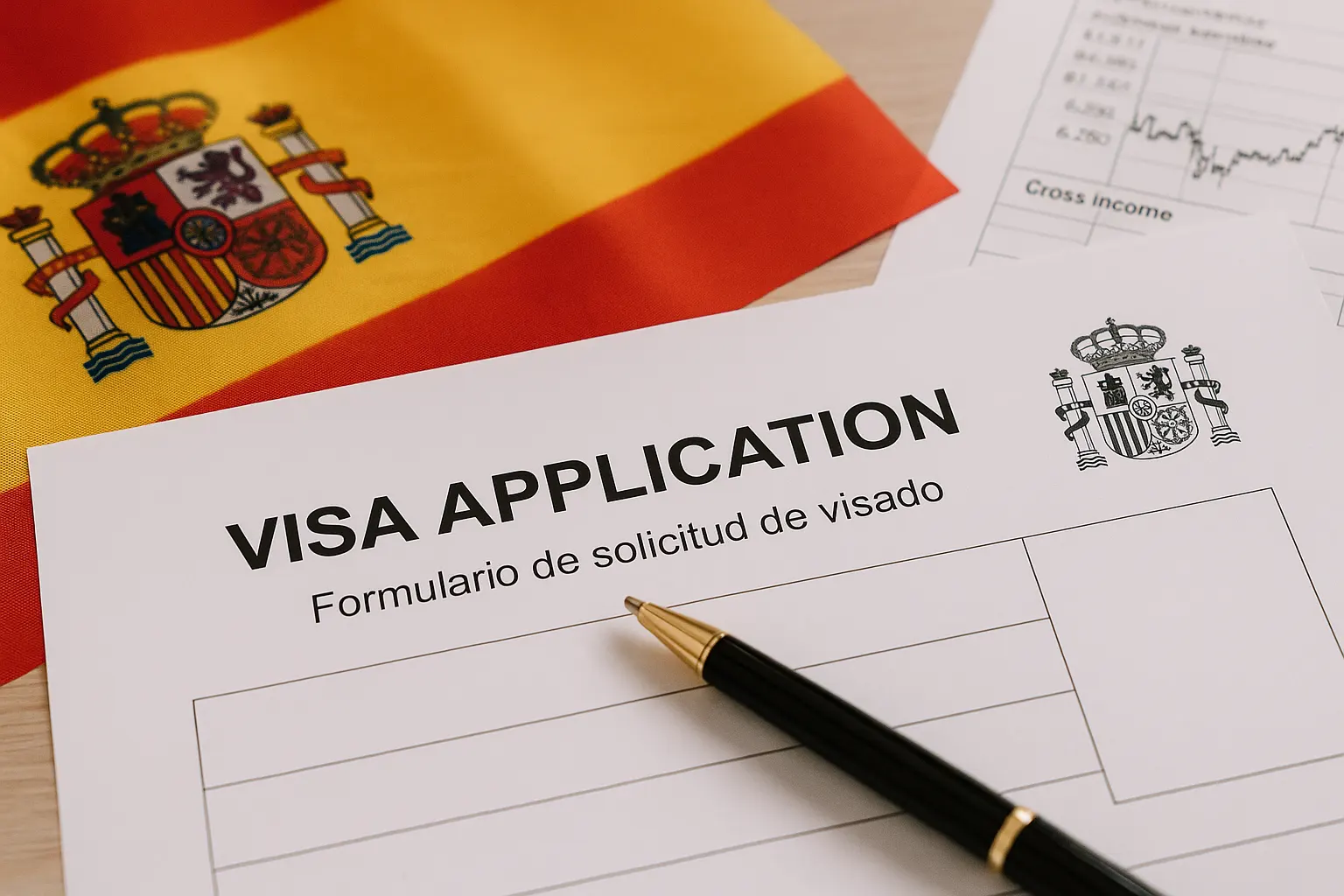
Application Process: The application can be submitted from your home country at the Spanish Consulate or directly in Spain if you enter as a tourist (with specific limitations on duration of stay before application). It typically involves submitting a comprehensive set of documents, including a visa application form, passport, proof of funds, health insurance, criminal record check, and work contracts.
The Non-Lucrative Visa (NLV)
This visa is ideal for US citizens who wish to retire in Spain or live there without working, possessing sufficient financial means to support themselves. It does not permit employment in Spain.
-
Eligibility Criteria:
-
Proof of substantial financial means (usually 400% of the Spanish IPREM – Indicador Público de Renta de Efectos Múltiples, which is adjusted annually. Expect to show around €2,400-€2,700 per month or around €28,800-€32,400 annually for a single applicant in 2026). This can be from savings, pensions, or other passive income sources.
-
Private health insurance covering all risks in Spain.
-
Clean criminal record.
-
Medical certificate confirming good health.
-
-
Application Process: Like the DNV, this visa is typically applied for at the Spanish Consulate in your country of residence (the US). It requires extensive documentation to prove financial solvency and health coverage.
2. The NIE: Your Key to Life in Spain
Regardless of your visa type, obtaining a NIE (Número de Identificación de Extranjero – Foreigner Identification Number) is paramount. This unique identification number is essential for almost every administrative and financial transaction in Spain.
-
Importance: You will need your NIE for opening a bank account, signing a mobile phone contract, renting or buying property, setting up utilities, and interacting with any government agency.
-
How to Obtain: You can apply for a NIE at a Spanish Consulate in the US before you move, or once you are in Spain at a police station (Comisaría de Policía) designated for foreign affairs. If applying in Spain, it’s often more straightforward if processing your visa from within the country already requires you to be there. Proper documentation, including your passport and proof of your legal status in Spain, will be required.
3. Health Insurance and Healthcare Access
As a US citizen, your eligibility for public healthcare (the Spanish national health system) depends on your residency status and employment. For most initial visa applications (DNV and NLV), you will be required to secure private health insurance.
-
Private Health Insurance: This must be comprehensive, cover all risks, and not have any co-payments or deductibles that limit access to care. Many Spanish and international providers offer suitable plans.
-
Public Healthcare Access: Once you gain residency and, for example, begin working and contributing to the Spanish Social Security system (whether employed or as an autónomo/self-employed), you will typically become eligible for public healthcare. Spain’s public health system is highly regarded, offering universal coverage to residents. This often involves registering for a NUSS (Número de la Seguridad Social) and obtaining a health card (tarjeta sanitaria).
4. Banking and Finances
Opening a Spanish bank account is crucial for managing your finances locally. You will need your NIE and passport. Many banks offer expat-friendly services, and some even allow you to start the process remotely before arriving.
5. Taxes in Spain
Once you become a tax resident in Spain (generally by spending more than 183 days in the country within a calendar year), you will be subject to Spanish income tax on your worldwide income. It is highly recommended to consult with a Spanish tax advisor, especially considering your specific visa type (e.g., the Digital Nomad Visa offers special tax regimes for the first few years, known as the “Beckham Law,” which can be advantageous).
Black Expats in Spain: Finding Community & Support
Building a strong community is an invaluable aspect of a successful expatriate experience. For Black expats, this often involves finding spaces where shared cultural experiences and understanding can be fostered.
1. Online Resources and Social Media
The digital age makes it easier than ever to connect before and after you move. In 2026, several active online communities cater specifically to Black expats in Spain:
-
Facebook Groups: Search for groups like “Black Expats in Spain,” “Afro Expats in [City Name, e.g., Madrid/Barcelona],” or “Black Americans in Spain.” These groups often share advice, organize meetups, and provide a vital support network.
-
WhatsApp Groups: Many Facebook groups evolve into more active WhatsApp chats for immediate communication and event planning.
-
Blogs and Podcasts: Numerous Black expats share their experiences through blogs and podcasts, offering valuable insights and connecting like-minded individuals.
2. Local Meetups and Organizations
Major Spanish cities like Madrid, Barcelona, Valencia, and Seville have diverse expat populations, including growing communities of Black Americans. Look for:
-
Meetup.com: A popular platform for finding interest-based groups. Search for “Black Expats,” “American Expats,” or specific cultural groups.
-
Cultural Centers and Associations: Some cities may have African or Afro-Caribbean cultural centers that host events, language exchanges, and social gatherings.
-
Language Exchange Groups (Intercambios): While not specific to Black expats, these are excellent ways to meet a diverse range of people, practice Spanish, and learn about local culture.
3. Understanding Spanish Culture and Racial Dynamics
Spain is a diverse country, but racial dynamics can differ from those in the United States. While generally welcoming, learning about Spain’s historical and contemporary context regarding race is beneficial. Most expats report a positive experience, but like any country, individual experiences can vary. Engaging respectfully with local culture and being open to learning are key.
Key Takeaways
-
Plan Ahead: The visa application process can be lengthy and requires meticulous documentation. Start early.
-
Get Your NIE: This is the single most important administrative step.
-
Secure Health Insurance: Private insurance is a mandatory requirement for most initial visas.
-
Build Your Network: Actively seek out expat communities and local groups both online and offline.
-
Learn Spanish: While English is spoken in tourist areas, learning Spanish significantly enhances your daily life and integration.
-
Consult Professionals: For complex matters like visas or taxes, professional legal and tax advice is essential.
Authority Sources
The information presented in this guide is derived from official sources and experienced organizations dedicated to expatriate affairs in Spain. These include:
-
Spanish Ministry of Foreign Affairs (Ministerio de Asuntos Exteriores, Unión Europea y Cooperación) – for visa regulations and official government policy.
-
Spanish Directorate General of Immigration (Dirección General de Migraciones) – for specific residency and immigration procedures.
-
Spanish Tax Agency (Agencia Tributaria) – for current tax regulations and obligations.
-
The European Commission’s official website – for general information on living and working in EU countries.
-
Reputable international expat forums and immigration law firms specializing in Spanish residency for non-EU citizens.
Contact Us Today!
Are you a Black expat from the US considering a move to Spain in 2026? Navigating the complexities of visas, residency, and finding your community can be challenging. Our team of experts specializes in assisting US citizens with their relocation to Spain, offering personalized guidance on visa applications, administrative procedures, and seamless integration. Don’t embark on this exciting journey alone. Contact us today for a consultation to ensure your move to Spain is smooth, successful, and enriching!
Citations
This text references the following articles:
-
Spain Top Choice for Digital Nomads, Black Expats Have Varied … — “Spain is a hub for digital nomads due to affordable living, quality of life, and scenic beauty. For Black expats, experiences vary; some find supportive …”
-
Living and Traveling in Spain as a Black Person: An Interview with … — “We’re Dani and Claudia, two American expats with a love of Spain. Let us be your guide to Spanish culture, language-learning, living abroad.”
-
Raising a Family in Seville Spain | Black Expats – YouTube — “Amos and Joy moved from the US to Spain about 4 years ago! That means their youngest barely knows/remembers living in the US (we believe …”
-
Non-working (Non-lucrative) residence visa — “Visa to reside in Spain without carrying out any gainful (work or professional) activity, provided that the applicant has sufficient and guaranteed means to …”
-
Spanish Non Lucrative Visa Essential Information – A Brother Abroad — “The Spanish Non-Lucrative visa is a Spanish residency permit designed for non-EU citizens, allowing expats and nomads to live in Spain for one year and up to …”