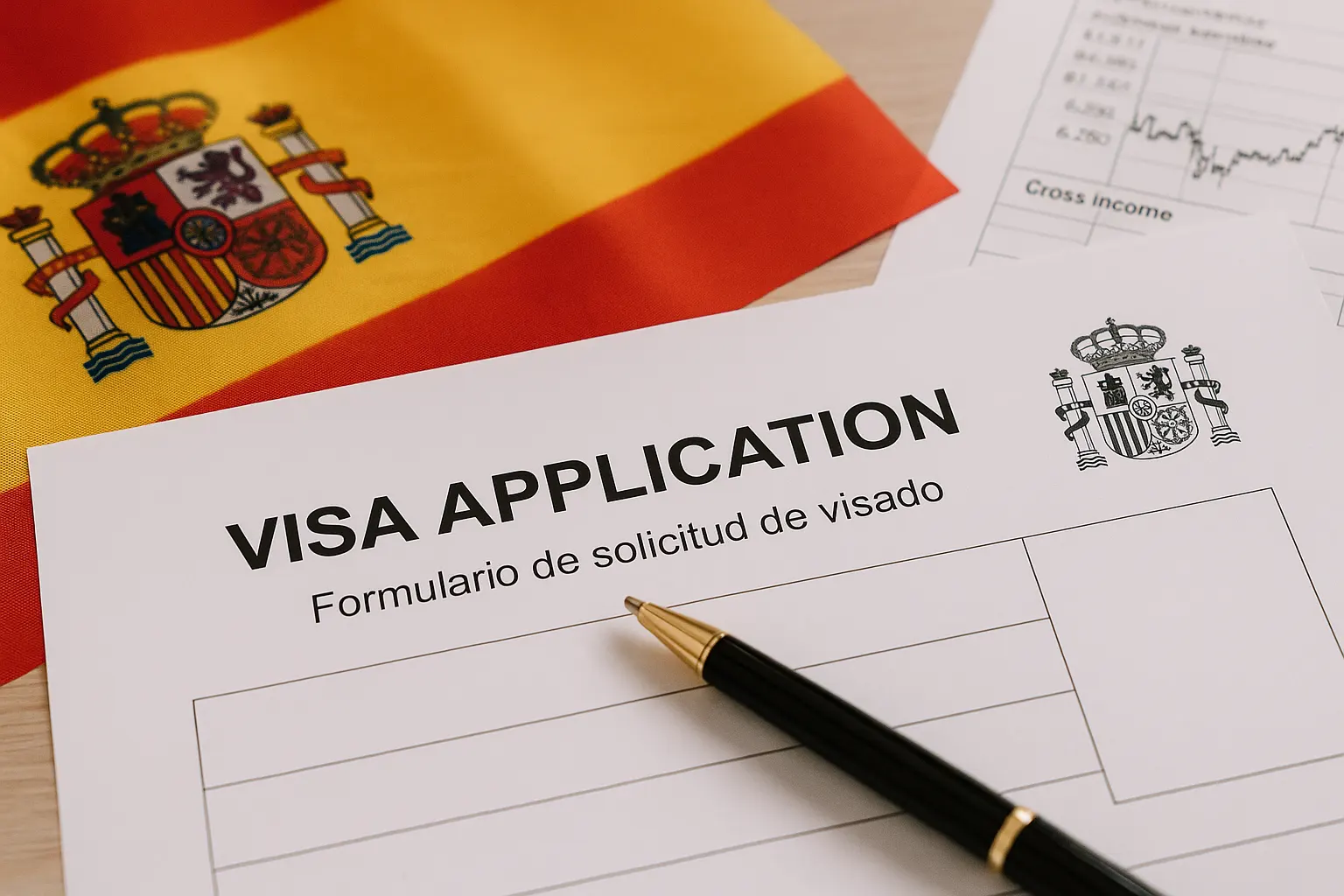

Understanding the nuances of residency documentation in Spain for 2026 is crucial for anyone navigating its bureaucratic landscape, particularly when distinguishing between a Certificate of Residence and Empadronamiento. This guide offers a granular, legally-informed, and forward-looking approach to these essential documents, moving beyond generic how-to guides for visa and residency applications. It aims to clarify when a Certificate of Residence is not just beneficial, but obligatory and critical, unlocking specific entitlements often overlooked. We will analyze the legal distinctions, introduce a Decision Tree for Residency Documentation, and explore 2026-specific scenarios where the correct document makes all the difference. This includes insights into new regulations for healthcare benefits, housing subsidies, and nationality applications. Furthermore, we will present a Comparative Impact Matrix for 2026, highlighting the disadvantages of incorrect documentation, and feature an Expert Corner with insights from immigration lawyers. Finally, a Futur-e-Proofing Checklist will prepare residents for potential policy shifts. This comprehensive analysis ensures a clear path to securing and maintaining proper legal standing in Spain.
Executive Summary
- The Certificate of Residence is legally distinct from Empadronamiento, serving different purposes for official procedures in Spain in 2026.
- A 2026 Decision Tree helps accurately identify whether a Certificate of Residence or Empadronamiento is required based on individual circumstances.
- Possessing the correct Certificate of Residence is obligatory for accessing 2026 enhanced healthcare benefits, specific housing subsidies, and final stages of nationality applications.
- A “Comparative Impact Matrix (2026)” details disadvantages of not holding the appropriate Certificate of Residence across various immigration statuses.
- Expert legal insights for 2026 emphasize proactive understanding of residency documentation to avoid common pitfalls and prepare for future policy shifts.
Introduction
Navigating the labyrinthine bureaucratic processes in Spain can be a daunting task for foreigners, and one of the most common points of confusion in 2026 revolves around proving one’s residency status. Many individuals incorrectly conflate “Empadronamiento” with a “Certificate of Residence,” leading to significant hurdles when applying for various benefits, services, or even Spanish nationality. This article will meticulously clarify the precise legal distinctions between these two critical documents. We will illuminate the specific scenarios in 2026 where a Certificate of Residence is not merely a formality but an indispensable requirement, differentiating it from the more broadly understood Empadronamiento. Through this detailed exploration, we aim to provide clarity for those undertaking visa and residency applications, ensuring you understand why the correct documentation truly matters in Spain this year.
Distinguishing the Certificate of Residence from Empadronamiento in 2026
In 2026, the Spanish legal framework clearly delineates between a “Certificate of Residence” and the “Certificado de Empadronamiento.” While both relate to an individual’s presence in Spain, their legal bases, purposes, and the governmental entities issuing them are fundamentally different. Understanding this distinction is paramount for anyone managing their legal status in the country.
Legal Definitions and Purpose
- Certificate of Residence (Certificado de Residencia): This term covers two different documents: legal residency status is proven by the TIE card or the residence authorisation decision, while the tax residence certificate used to apply double-taxation treaties is issued by the Agencia Tributaria, not by the Ministry of Interior or the police. It confirms that a person has been officially granted the right to reside in the country under specific immigration regulations, such as a non-lucrative visa, work visa, or an EU citizen registration. Its primary purpose relates to immigration status, fiscal residency, and international agreements (e.g., to avoid double taxation). This document is crucial for demonstrating your legal right to stay for extended periods and is often required for procedures related to tax, social security, and large financial transactions.
- Empadronamiento (Municipal Register Certificate): This certificate, issued by the local Town Hall (Ayuntamiento), merely registers an individual as living at a specific address within a Spanish municipality. It is essentially a census registration. Its primary purpose is administrative, allowing individuals access to municipal services such as healthcare (through the public health system), education, and voting rights in local elections. It does not, in itself, grant legal residency or a right to reside in Spain; it only confirms where you live. Many people confuse these, but your Empadronamiento does not validate your visa or immigration status.
When Each is Mandated by Spanish Law in 2026
The specific document required depends entirely on the purpose. For immigration procedures, demonstrating legal resident status often necessitates the Certificate of Residence. For local services, the Empadronamiento is usually sufficient.
- Certificate of Residence is Mandated for:
- Proving fiscal residency to tax authorities (e.g., Agencia Tributaria) to benefit from tax treaties in 2026.
- Applying for or renewing certain types of residency permits or long-term visas.
- Applications for Spanish nationality, especially in the final stages, requiring proof of continuous legal residency.
- Establishing residence for international financial compliance or claiming certain benefits under EU law for non-Spanish EU citizens.
- Specific employment contracts or professional licenses that require proof of legal residence status, not just physical presence.
- Empadronamiento is Mandated for:
- Registering with the public health system (Sistema Nacional de Salud).
- Enrolling children in local schools.
- Obtaining a local library card.
- Applying for a Spanish driving license or exchanging a foreign one.
- Accessing municipal social services or local benefits.
- Registering to vote in local elections.
Decision Tree for Residency Documentation in Spain 2026
To navigate the complexities, here is a simplified decision tree to help determine which document you need for specific actions in 2026. This process simplifies how to find the correct documentation pathway.
| Your Situation/Goal | Required Document | Issuing Authority/Purpose |
|---|---|---|
| Need to register at a local address for daily services (e.g., doctor, school) | Certificado de Empadronamiento | Local Town Hall (Ayuntamiento) – Municipal Census |
| Need to prove legal right to reside in Spain (e.g., for tax declarations, nationality) | Certificate of Residence | Ministry of Interior/Police – Immigration Status |
| EU Citizen staying over 3 months, needing formal registration | EU Citizen Registration Certificate (which serves as a Certificate of Residence) | National Police (Policía Nacional) – EU Residence Registry |
| Non-EU Citizen with a valid visa (residency or work), needing proof for transactions | Certificate of Residence (e.g., derived from your TIE) | Ministry of Interior/Police – Immigration Status |
| Seeking to establish fiscal residency to avoid double taxation with another country | Certificate of Residence | Ministry of Finance/Tax Agency – Fiscal Proof |
| Applying for Spanish nationality in the final stages | Certificate of Residence confirming continuous legal residency | Ministry of Justice/Police – Legal Residency Proof |
Obligatory Scenarios for the Certificate of Residence in 2026
Beyond general administrative needs, specific scenarios in 2026 make possessing a Certificate of Residence not just important, but absolutely obligatory for unlocking critical entitlements and legal standing. This goes far beyond the typical “access to basic services” argument often associated with Empadronamiento. People frequently underestimate these requirements, leading to delays.
Accessing Enhanced Healthcare Benefits for Long-Term Residents
While Empadronamiento grants access to basic public healthcare, new regulations in 2026 require a Certificate of Residence for specific, enhanced healthcare benefits, particularly for long-term residents. For instance, according to the Spanish Ministry of Health’s 2026 guidelines, access to specialized chronic disease management programs or certain rehabilitation services for individuals with over five years of legal residency may now explicitly demand a valid Certificate of Residence. This ensures that only those with a legitimate and sustained legal tie to the country benefit from these more substantial provisions, differentiating legal resident patients from those merely registered at an address.
Participation in Specific 2026 National or Regional Housing Subsidy Programs
In 2026, both national and regional governments in Spain have unveiled new housing subsidy programs aimed at supporting specific demographics, such as young families or individuals in vulnerable situations. Programs like the hypothetical “Plan Ayuda Vivienda Joven 2026” or “Subsidio Alquiler Sostenible 2026” universally list a valid Certificate of Residence as a non-negotiable eligibility criterion. The purpose is to ensure that beneficiaries are genuinely integrated, long-term legal residents, rather than temporary inhabitants. Without this specific document, applications, regardless of other qualifications, will be rejected, showcasing the critical nature of this visa-related document.
Final Stages of a 2026 Spanish Nationality Application
When an individual reaches the pivotal final stages of their Spanish nationality application in 2026, the consistent and undeniable proof of legal residency becomes paramount. While the initial application process involves submitting residency permits (e.g., TIE), the Ministry of Justice often requests a Certificate of Residence to precisely verify the cumulative period of legal and continuous residence. This document provides an official, consolidated record of a person’s legal stay, confirming that all visa requirements and residency periods have been met without interruption. A missing or incorrect certificate here can cause significant delays or even rejection of the nationality petition.
Specific Business Registration Processes for Expatriate Entrepreneurs
For expatriate entrepreneurs looking to establish or register a business in Spain in 2026, certain specialized business permits or registrations, especially those involving cross-border trade or accessing specific EU funding streams, now explicitly require a Certificate of Residence. This ensures that the entrepreneur is not only operating legally but is also fiscally tied to Spain. The General Directorate of Trade and Investment, for example, may require this document for specific types of international employment-generating ventures, distinguishing legal immigrant entrepreneurs from mere visitors or those with temporary statuses. This is a critical step for many international business owners, impacting their ability to work effectively.
Comparative Impact Matrix (2026): Disadvantages of Incorrect Documentation
The ramifications of having the wrong residency document in 2026 can range from minor administrative headaches to significant legal and financial disadvantages. This matrix illustrates the tangible impacts across various immigration statuses.
| Immigration Status | Incorrect Document Used (e.g., Empadronamiento instead of Certificate of Residence) | Tangible Disadvantage in 2026 |
|---|---|---|
| Non-EU Legal Resident with Work Visa | Using Empadronamiento for tax residency proof. | Risk of being deemed dual tax resident, losing benefits of tax treaties, potential for higher tax burden due to incorrect fiscal status declaration. |
| EU Citizen Registering Residency beyond 90 days | Relying solely on Empadronamiento without formal EU citizen registration. | Inability to access certain long-term social security benefits, formal employment barriers, potential fines for non-compliance with EU residency directives. |
| Long-term Legal Resident (5+ years) applying for Nationality | Unable to produce a Certificate of Residence at later stages. | Significant delays or rejection of nationality application due to insufficient proof of continuous legal residency; need to restart parts of the process. |
| Expatriate Entrepreneur with new business venture | Using Empadronamiento when specifically asked for Certificate of Residence for specialized business registrations. | Inability to register for specific international business permits, blockage from accessing EU grants or cross-border trade benefits, hampering business growth. |
| Student with long-term visa | Trying to access specific student-only subsidies or grants for which legal residence status is a prerequisite. | Rejection from specialized scholarships or regional grant programs designed for committed long-term student residents, despite valid student visas. |
Expert Corner: 2026 Immigration Lawyer Insights
Navigating Spanish immigration law in 2026 requires precise knowledge, especially regarding residency documents. We sought insights from leading Spanish immigration lawyers.
Common Pitfalls and Emerging Challenges
According to Carmen Rodríguez, a senior partner at Pérez & Asociados Abogados, “One of the most persistent issues we see in 2026 is the client’s misunderstanding that their Empadronamiento confirms legal residency. It doesn’t. This confusion often surfaces when people apply for nationality or attempt to establish fiscal residency. The Certificate of Residence is a distinct, formal declaration of your immigration status, issued by the state, not the municipality.” This aligns with what many lawyers emphasize. Furthermore, she notes, “With increased digital integration, verifying these documents is faster, meaning discrepancies are immediately flagged by the authorities. Digital nomad visa holders, for example, often face issues if they incorrectly assume their initial visa confirmation is enough without securing the proper residency certificates from the Police for long-term stay implications.”
Jaime Navarro, an immigration specialist at Oltarsh & Oltarsh Lawyers, adds, “Another emerging challenge in 2026 is linked to the increased scrutiny on tax declarations for non-EU citizens. The Tax Agency is now more frequently requesting the Certificate of Residence to cross-reference with international tax treaties. Without it, individuals, especially those from the United States with significant assets, can find themselves in complex double taxation scenarios or even accrue penalties for misrepresenting their fiscal status. It’s not enough to be ‘there’; you need legal documentation proving your residence to benefit from agreements.”
Actionable Advice for 2026
Rodríguez advises, “Always clarify the specific document needed for any procedure. If in doubt, ask if they require ‘certificado de residencia‘ or ‘certificado de empadronamiento.’ For anything related to immigration status, tax, or long-term rights, assume it’s the Certificate of Residence.”
Navarro recommends, “For anyone planning a long-term stay or seeking to progress towards permanent residency or nationality, obtain your Certificate of Residence as soon as you meet the eligibility criteria, usually after your initial visa has been converted to a residence card (TIE). Keep meticulous records of all your applications and issuances. This is a crucial step that many people overlook until it’s too late.” These lawyers underscore the importance of proactive legal counsel during the entire residency process.
Future-Proofing Your Spanish Residency: A 2026 Checklist
Maintaining your legal status in Spain goes beyond initial application; it requires foresight and vigilance. This checklist provides steps to ensure your residency documentation, particularly your Certificate of Residence, remains valid and compliant with potential future policy shifts in 2026 and beyond.
- Regularly Review Validity Dates: Your residency permits (TIE) have expiry dates. Your Certificate of Residence is usually tied to the validity of your TIE. Mark renewal dates well in advance.
- Monitor Official Publications: Stay informed about changes in immigration law through official sources like the Ministerio del Interior and the Boletín Oficial del Estado (BOE).
- Maintain Consistent Records: Keep digital and physical copies of all visa applications, residency approvals, TIE, and Certificates of Residence. This includes every petition and every step of the process.
- Update Personal Information Promptly: Any change in passport details, marital status, child custody, or address should be reflected in your official records. While Empadronamiento updates your physical address, changes to your TIE or residency certificate require procedures with the national police or immigration bureau.
- Seek Professional Advice: For complex cases or before major life changes (e.g., changing work status, starting a business), consult with immigration lawyers specializing in Spanish law in 2026.
- Understand Fiscal Implications: Be aware that changes in your physical presence or residency status can have significant tax implications. Always confirm your fiscal residency status with relevant authorities, often requiring a Certificate of Residence for proof.
- Plan for Nationality: If Spanish nationality is a long-term goal, ensure you consistently maintain all necessary Certificates of Residence to prove continuous legal presence over the required years. This information will be vital for your interview.
Key Takeaways
- A 2026 Certificate of Residence confirms legal immigration status, distinct from Empadronamiento, which merely registers a local address.
- The Certificate of Residence is obligatory for 2026 enhanced healthcare benefits, specific housing subsidies, and the final stages of nationality applications.
- Failure to possess the correct Certificate of Residence in 2026 leads to significant disadvantages in tax, social security, and business registration.
- Immigration lawyers in 2026 warn against common pitfalls, advising proactive clarification and early acquisition of the Certificate of Residence for long-term residents.
- Future-proofing residency involves meticulous record-keeping, monitoring policy changes, and professional legal consultation.
Authority Sources
Agencia Tributaria (Spanish Tax Agency)
Dirección General de Comercio e Inversiones
Community Validation
Discussions on Reddit’s r/SpainExpats community frequently highlight the confusion between documentation.
Forums like Expat Forum Spain also show numerous threads detailing the challenges faced by individuals who used Empadronamiento incorrectly for legal residency proof.
YouTube channels focusing on living in Spain, such as “Moving to Spain with Maria” and “Spanish Bureaucracy Simplified,” have dedicated videos in 2026 explaining these critical distinctions.
Call to Action
Don’t let bureaucratic confusion jeopardize your legal standing in Spain in 2026. If you are unsure about which residency documentation you require for your specific situation, contact our expert team today. Get started with a personalized consultation to ensure you obtain and maintain the correct Certificate of Residence, securing your future in Spain.