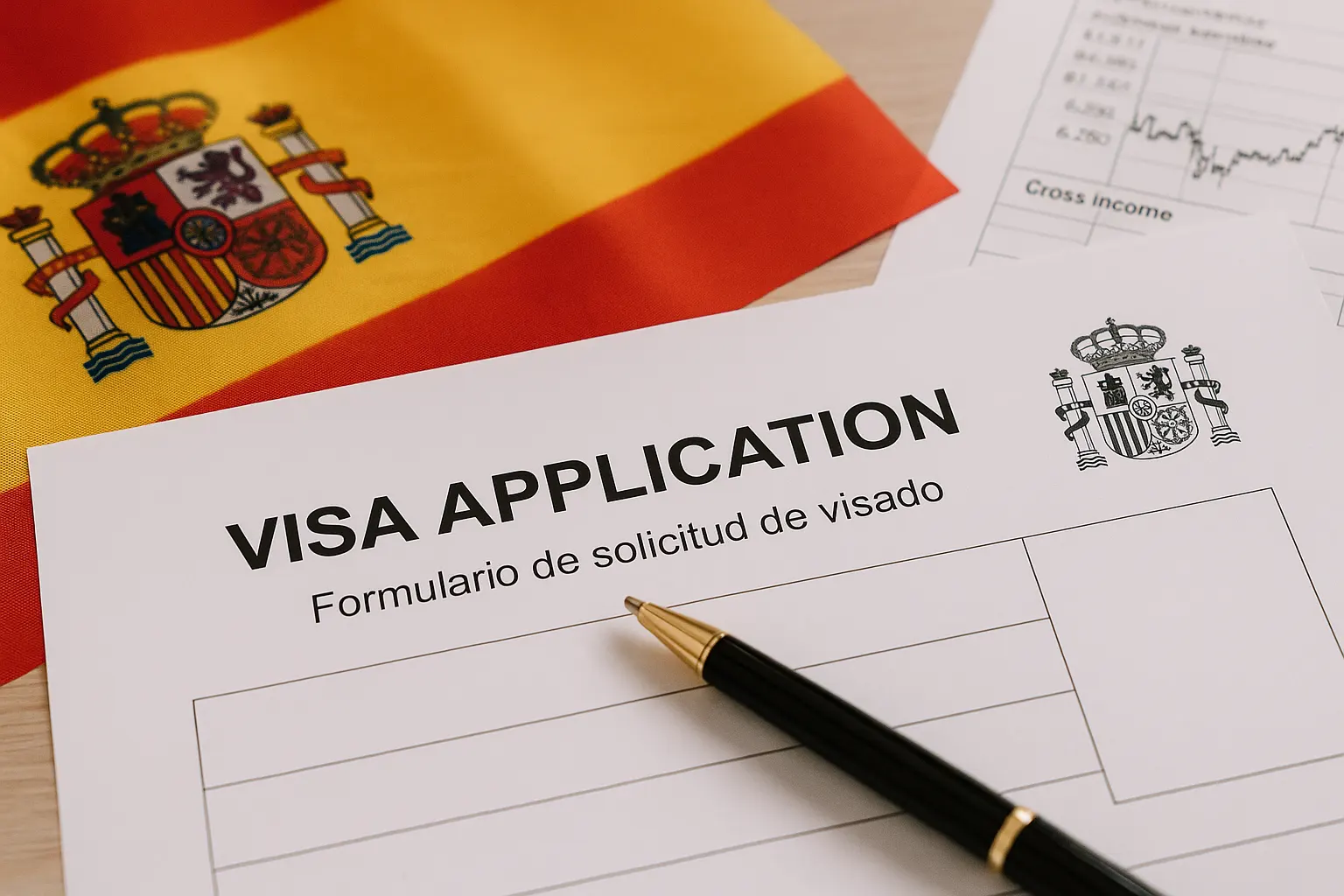

The Essential Role of Spanish Notaries in Your 2026 Visa and residency applications
Navigating the intricacies of visa and residency applications in Spain can often feel like a formidable challenge, particularly for those unfamiliar with the Spanish legal and administrative landscape. A critical, yet sometimes overlooked, component of this process is the role of Spanish Notaries. In 2026, their function remains as vital as ever, providing legal security and ensuring the authenticity of documents that are fundamental to securing your stay in Spain. This comprehensive guide outlines the practical and structured ways in which Spanish notaries assist individuals seeking a Spanish visa or residency.
What is a Spanish notary and Why Are They Important?
A Spanish notary public, or Notario, is a public official who is legally authorized to certify the authenticity of documents, attest to the identity of signatories, and ensure that all parties understand the legal implications of the documents they are signing. They operate under strict legal guidelines and act as impartial witnesses, providing an essential layer of legal certainty and protection for all transactions. For visa and residency applications in 2026, their function is paramount because Spanish authorities often require notarized documents to verify their legitimacy.
The importance of a Spanish notary in your visa and residency application process stems from several key aspects:
-
Legal Certainty: Notaries provide an official certification that a document is genuine and that signatures are authentic, which is crucial for Spanish administrative bodies.
-
Impartiality: As public officials, notaries are obliged to act impartially, ensuring fairness and legality for all parties involved.
-
Expertise: They possess in-depth knowledge of Spanish law and can advise on the legal implications of the documents you are presenting.
-
Prevention of Fraud: Their rigorous verification process significantly reduces the risk of fraud or misrepresentation in legal documents.
Key Situations Where Spanish Notaries Are Involved in 2026 Visa and Residency Applications
When applying for various types of visas and residency permits in Spain in 2026, you will encounter multiple scenarios where the services of a Spanish notary are indispensable. Understanding these situations upfront can help streamline your application process.
1. Powers of Attorney (Poderes)
One of the most common reasons to engage a Spanish notary is to grant a Power of Attorney (Poder). This document allows another person, such as a lawyer or a trusted family member, to act on your behalf in Spain. This is especially useful if you are applying from outside Spain or foresee difficulties in being present for all administrative procedures.
Examples of how a Power of Attorney might be used in visa and residency applications:
-
Submitting documents: Your appointed representative can physically submit required documents to government offices.
-
Signing contracts: They can sign rental agreements, purchase agreements, or other contracts necessary for your residency.
-
Handling administrative tasks: This includes obtaining your Foreigner Identification Number (NIE), opening a bank account, or dealing with tax authorities.
To acquire a Power of Attorney, you typically need to visit a notary in person with your identification (passport) and specify the exact powers you wish to grant. The notary will draft the document, explain its contents, and witness your signature.
2. Certified Copies of Documents (Copias Compulsadas)
Many Spanish institutions and embassies require certified copies of your original documents rather than the originals themselves. A Spanish notary can certify that a copy is a true and accurate reproduction of the original document. This prevents you from having to relinquish important original documents throughout the application process.
Common documents that may require certified copies for visa and residency applications include:
-
Passports and all passport pages with stamps/visas
-
Birth Certificates
-
Marriage Certificates
-
Academic Degrees and Diplomas
-
Criminal Record Certificates
-
Financial statements or proof of funds
The notary will compare the copy with the original and affix their stamp and signature, validating its accuracy.
3. Affidavits and Declarations (Actas Notariales y Declaraciones Juradas)
In certain circumstances, you may need to make a sworn statement or declaration (declaración jurada) to confirm specific facts or intentions. A notary can formally record these statements, giving them legal weight. These affidavits can be crucial for various visa categories.
For example, if you are applying for a Non-Lucrative Visa or another residence permit, you might need to declare:
-
That you have no intention to work in Spain (for non-lucrative visas).
-
The origin of your funds, where it must be documented.
-
Your understanding and commitment to abide by Spanish laws.
The notary will ensure you understand the declaration and then officially record it, making it a legally recognized document.
4. Real Estate Transactions (Golden Visa abolished in 2025)
Residency through investment, including the Golden Visa, was abolished on 3 April 2025 (Organic Law 1/2025), so buying property no longer gives access to residence; only renewals of permits already granted remain possible. Spanish notaries play a central and non-negotiable role in all real estate transactions.
When purchasing property in Spain, the notary is responsible for:
-
Drafting the Public Deed of Sale (Escritura de Compraventa): This is the official document that transfers property ownership.
-
Verifying the legal status of the property: Ensuring there are no outstanding debts, liens, or other encumbrances on the property.
-
Verifying the identities of the buyer and seller: Confirming all parties are who they claim to be.
-
Ensuring compliance with tax laws: Advising on and collecting property transfer taxes (ITP) or VAT (IVA) as applicable.
-
Registering the deed: Once signed, the notary ensures the deed is submitted to the Land Registry for official record-keeping.
The notary’s involvement ensures that the property acquisition is legally sound, providing the necessary documentation for your Golden Visa application.
5. Company Formation for Entrepreneurial or Digital Nomad Visas
If your visa or residency strategy involves setting up a business in Spain, for instance, under the Entrepreneur Visa or the Digital Nomad Visa, the formation of a Spanish company (e.g., an S.L. – Sociedad Limitada) requires the intervention of a notary.
The notary’s role in company formation includes:
-
Drawing up the Articles of Association (Estatutos Sociales): This document defines the company’s rules, objectives, and structure.
-
Certifying the identity of the founders: Ensuring all partners are correctly identified.
-
Verifying capital contributions: Confirming that the initial capital has been deposited.
-
Registering the company: Submitting the public deed of incorporation to the Mercantile Registry (Registro Mercantil).
This notarized public deed of incorporation is a fundamental document for your visa application as it formally establishes your business activity in Spain.
Finding and Engaging a Spanish Notary in 2026
Accessing notary services in Spain is a straightforward process. You typically find notaries listed online or through legal professionals. Here are some practical steps:
-
Locate a Notary: You can find a list of notaries through the official Spanish General Council of Notaries (Consejo General del Notariado) website, which provides a searchable directory.
-
Schedule an Appointment: It’s advisable to call ahead and schedule an appointment. Explain the purpose of your visit (e.g., “power of attorney for visa application”).
-
Prepare Required Documents: Bring your original identification document (passport for non-EU citizens), and any original documents you need notarized or that pertain to the transaction. If documents are in a language other than Spanish, they may require an official sworn translation (traducción jurada).
-
Language Considerations: If you are not fluent in Spanish, you may need to bring an independent interpreter, or the notary might have staff who can assist. For critical documents, an official sworn translator is often mandatory.
-
Fees: Notary fees in Spain are regulated by law. They vary depending on the type and complexity of the service. The notary should be able to provide an estimate beforehand.
2026 Update: Digitalization and Notary Services
In 2026, Spain continues its push towards digitalizing administrative processes. While the core function of notaries remains deeply rooted in traditional legal verification, there have been advancements that might affect how you interact with them.
-
Electronic Signatures: While physical presence is often still required for initial identity verification, notaries are increasingly utilizing secure electronic signature platforms for certain less complex documents or follow-up procedures.
-
Online Consultations: Many notary offices now offer initial online consultations, allowing you to discuss your needs and prepare for your in-person visit more efficiently.
-
Remote Notarization (Limited Scope): While full remote notarization (without any physical presence) is not yet widespread for all critical documents requiring a Spanish notary’s intervention in visa and residency applications, certain preliminary steps or less complex certifications might be handled with advanced video conferencing and electronic identity verification in specific, regulated circumstances. Always confirm with the individual notary office regarding their current capabilities and what services can be performed remotely for your specific needs.
Common Pitfalls to Avoid
To ensure a smooth interaction with Spanish notaries and prevent delays in your visa or residency application, consider these points:
-
Verification of Documents: Always bring original documents. Copies, even clear ones, will not suffice for the initial verification stage.
-
Language Barrier: Do not underestimate the need for accurate translation. Official sworn translators are required for legal documents in a foreign language.
-
Specificity of Powers: When granting a Power of Attorney, be extremely specific about the powers you are granting. Ambiguity can lead to legal complications.
-
Appointment Scheduling: Notary offices can be busy. Plan ahead and book appointments well in advance, especially during peak application periods.
-
Understanding Fees: Clarify all fees beforehand. While regulated, there can be additional charges for copies, taxes, or other administrative tasks.
Conclusion
The role of Spanish notaries is undeniably central to a successful visa and residency application in 2026. From certifying copies of your essential documents to facilitating complex property transactions or company formations, their legal expertise and official authority provide the legal framework for your journey to live in Spain. By understanding their functions, preparing diligently, and engaging with them effectively, you can ensure that the notarization aspects of your application are handled professionally, contributing significantly to a successful outcome. Always approach this process with patience and thoroughness, recognizing the notary’s crucial contribution to the legal security of your endeavors in Spain.
Citations
This text references the following articles:
-
The Spanish Notary: What it is, role and fees – Spain Explained — “The notary is a professional within the Spanish law system and his/ her main function is to certify Spanish documents ensuring that private agreements fulfil …”
-
The Role of the Public Notary in Spain – Franke & de la Fuente — “The public notary plays a vital role in ensuring the legality, authenticity, and integrity of a wide range of documents and transactions.”
-
The Spanish Notary – Balearic Properties — “The notary is a professional within the Spanish law system and his/ her main function is to certify Spanish documents ensuring that private agreements fulfil …”
-
Why Notaries are Essential in Spain | Malaga Solicitors — “Notaries play a crucial role in facilitating legal transactions in Spain, ensuring that agreements and contracts are valid and recognized. Their unique position …”
-
The Role of the Public Notary in Spain – LinkedIn — “The public notary plays a vital role in ensuring the legality, authenticity, and integrity of a wide range of documents and transactions.”