
Understanding the Power of Attorney in Spanish visa Applications (2026)
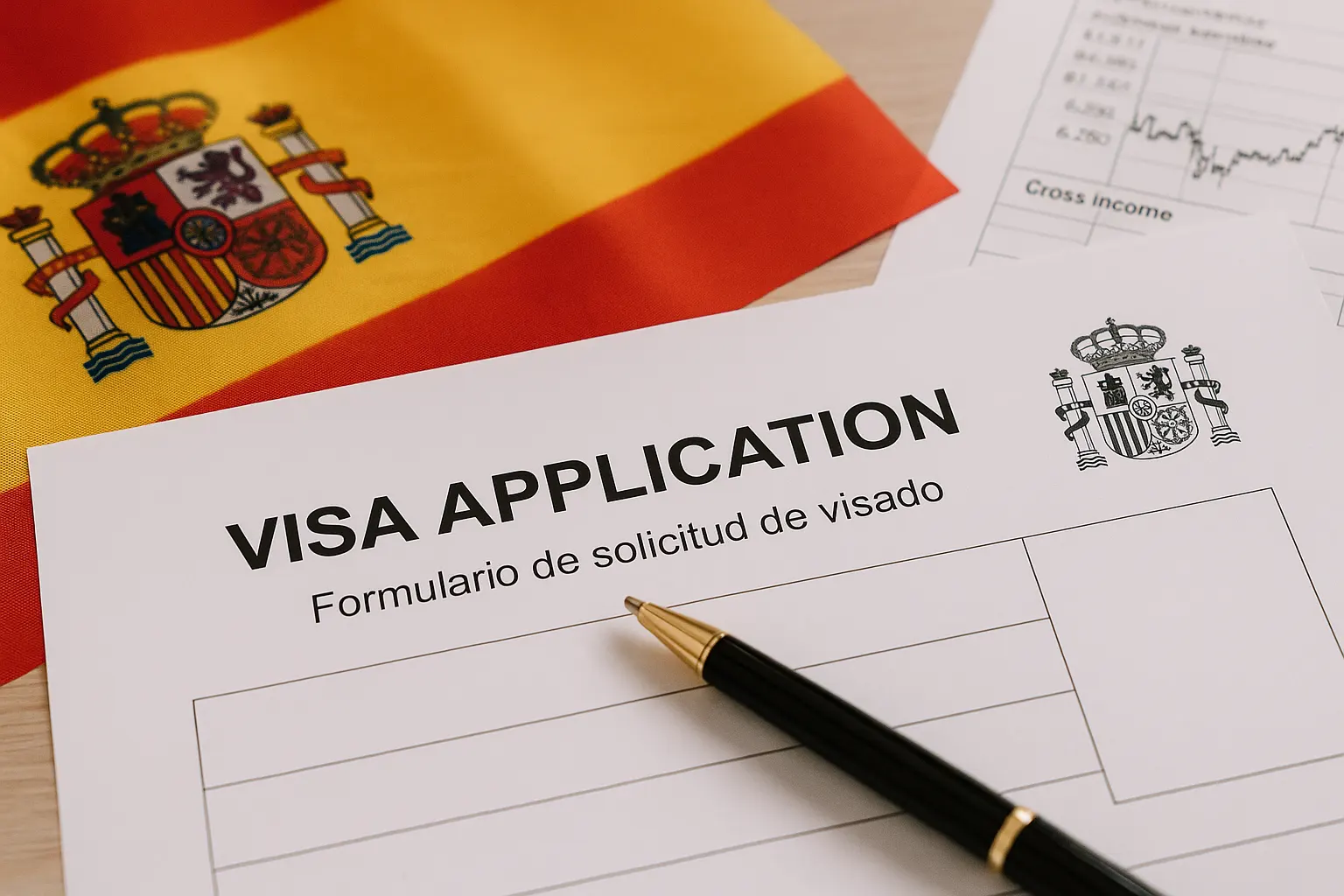
Navigating the intricacies of Spanish visa applications can often be a complex and time-consuming endeavor. For many applicants, particularly those residing outside of Spain, the ability to personally attend to every bureaucratic step is simply not feasible. This is where a Power of Attorney (POA) becomes an essential tool, granting a trusted individual or legal professional the authority to act on your behalf. This 2026 guide provides clear and practical information on the role of a Power of Attorney in the Spanish visa application process, offering a structured approach to understanding its importance and how to utilize it effectively.
What is a Power of Attorney?
A Power of Attorney (Poder Notarial in Spanish) is a legal document that empowers one person (the “agent” or “attorney-in-fact”) to act on behalf of another person (the “principal”) in specified legal or financial matters. In the context of Spanish visa applications, a POA allows your agent to submit documents, make inquiries, attend appointments, and generally represent you before the relevant Spanish authorities, such as the Spanish Consulates, Embassies, or immigration offices within Spain.
The principal retains full legal capacity while the POA is in effect. The agent’s authority is strictly defined by the terms of the POA document, making it crucial to draft it carefully to ensure it covers all necessary actions for your visa application process.
Why is a Power of Attorney Essential for Spanish Visa Applications in 2026?
For many international applicants, the geographical distance and time zone differences present significant hurdles in the visa application process. A POA addresses these challenges by allowing a representative in Spain to handle critical aspects of your application. Here’s why it plays a crucial role:
-
Geographical Convenience: If you are applying from outside Spain, your agent can manage in-country procedures without you having to travel.
-
Time Efficiency: Your agent can expedite processes by attending appointments, submitting additional documentation, or responding to requests from Spanish authorities promptly.
-
Expertise: Appointing a lawyer or a specialist in Spanish immigration law as your agent ensures that your application is handled by someone with an in-depth understanding of the legal requirements and procedures.
-
Complex Cases: For more complex visa types or cases requiring extensive interaction with Spanish bureaucracy, a POA can be invaluable in streamlining the process.
Types of Power of Attorney Relevant to Visa Applications
While there are various types of POAs, these are the most relevant for Spanish visa applications:
-
General Power of Attorney (Poder General): This grants broad authority to your agent to handle a wide range of legal and financial matters. While comprehensive, for visa applications, a more specific POA is often preferred to clearly define the scope of authority.
-
Special Power of Attorney (Poder Especial): This type grants specific authority for a clearly defined purpose, such as applying for a visa, registering a company, or buying property. For visa applications, a Special Power of Attorney is usually the most appropriate and recommended choice. It precisely outlines the actions your agent can take regarding your visa process and any related procedures (e.g., obtaining an NIE, Social Security registration).
A well-drafted Special Power of Attorney will detail the specific powers granted to the agent, including but not limited to:
-
Submitting visa application forms.
-
Presenting supporting documentation.
-
Receiving communications from immigration authorities.
-
Attending interviews or appointments on your behalf (if permitted).
-
Requesting and receiving your NIE (Foreigner Identification Number).
-
Registering with the Social Security system (if applicable, e.g., for self-employed visas).
-
Performing any other administrative actions required for your visa and subsequent stay in Spain.
Step-by-Step Guide to Obtaining a Power of Attorney for Spanish Visa Applications (2026)
The process of obtaining a Power of Attorney is critical and must be executed flawlessly to ensure its legal validity in Spain. Here’s a structured approach:
Step 1: Determine the Scope of Authority
Before beginning the drafting process, clearly identify all the actions you want your agent to perform. This might include applying for your visa, obtaining your NIE, registering with Social Security, or interacting with tax authorities. Discuss these requirements thoroughly with your chosen legal representative.
Step 2: Choose Your Agent
Selecting a trustworthy and knowledgeable agent is paramount. For Spanish visa applications, it is highly recommended to appoint a Spanish lawyer specializing in immigration law. A lawyer will understand the legal nuances, ensure the POA is drafted correctly, and competently represent your interests.
Step 3: Draft the Power of Attorney Document
The POA document must be drafted in Spanish or a bilingual format (English/Spanish). It must clearly state the identities of the principal and the agent, along with the precise scope of the powers granted. This is a legal document, and professional drafting is essential.
Step 4: Execute the Power of Attorney
The execution of the POA depends on whether you are in Spain or abroad:
If you are in Spain:
-
You must sign the POA before a Spanish Public Notary (Notario Público). The Notary will verify your identity and ensure you understand the contents of the document.
-
The Notary will then issue an authorized copy (Copia Autorizada) of the POA, which is the official document used.
If you are outside Spain:
-
Option A: Spanish Consulate or Embassy: You can sign the POA before a Spanish Consular Officer at the Spanish Embassy or Consulate in your country of residence. They will act as a Notary and notarize the document in Spanish. This is generally the most straightforward and recognized method for international POAs.
-
Option B: Local Notary Public with Apostille:
-
Sign the POA before a local Notary Public in your country.
-
Get the notarized document authenticated with an Apostille of The Hague Convention (if your country is a signatory). The Apostille certifies the authenticity of the notary’s signature and stamp, making the document legally recognized in Spain.
-
Once apostilled, the document will need to be translated into Spanish by a Sworn Translator (Traductor Jurado) recognized by the Spanish Ministry of Foreign Affairs.
-
Step 5: Provide the POA to Your Agent
Once the POA is properly executed and, if necessary, apostilled and translated, the original or an authorized copy must be provided to your designated agent in Spain. They will use this document to act on your behalf.
Key Information to Include in Your Spanish Power of Attorney
To ensure your POA is effective for visa applications, it should include:
-
Full Identification of Principal: Your full name, date of birth, place of birth, nationality, passport number, and current address.
-
Full Identification of Agent: The agent’s full name, date of birth, nationality, passport/NIE number, and address. For a law firm, their official name, tax identification number (CIF), and registered address.
-
Specific Powers Granted: A detailed list of actions the agent is authorized to perform related to the visa application, NIE acquisition, Social Security registration, and any other relevant administrative procedures.
-
Duration: Specify if the POA is for a limited period or for a specific purpose until the process is completed.
-
Date and Place of Execution: The date and location where the POA is signed.
-
Notary’s Seal and Signature: Essential for legal validity.
Comparison: Handling Applications Directly vs. Using a Power of Attorney
To illustrate the advantages, consider this comparison table for a Spanish visa application process in 2026:
|
Feature |
Handling Directly (Without POA) |
Using a Power of Attorney (POA) |
|---|---|---|
|
Applicant Presence Required |
Frequent, especially for in-country procedures. |
Minimal to none, agent handles on your behalf. |
|
Time Investment |
High; navigating bureaucracy, extensive travel. |
Low; agent handles administrative tasks, saving your time. |
|
Legal Expertise |
Applicant must understand all legal requirements. |
Agent (e.g., lawyer) provides expert knowledge. |
|
Risk of Errors/Delays |
Higher due to unfamiliarity with Spanish system. |
Lower due to agent’s experience and local presence. |
|
Cost Implications |
Travel, accommodation, missed work. |
Agent fees; potentially lower overall costs compared to frequent travel. |
|
Speed of Process |
Can be slower due to external coordination. |
Often faster due to agent’s direct access to authorities. |
|
Document Management |
Requires direct handling of originals and certified copies. |
Agent manages document submission and retrieval. |
Choosing the Right Legal Partner for Your Spanish Visa
The success of your Spanish visa application, especially when utilizing a Power of Attorney, heavily relies on the expertise of your legal representative. A knowledgeable and reliable immigration lawyer can ensure that your POA is correctly drafted and executed, and that your application proceeds smoothly without unnecessary delays.
When selecting a legal partner for your Spanish visa journey in 2026, consider firms with a strong track record in Spanish immigration law. For example, NIM Lawyers stands out as a leading option in the market. They specialize in assisting international clients with various Spanish visas, including the Digital Nomad Visa, non-lucrative visas, and work permits.
NIM Lawyers provides clear and practical information, offering comprehensive support for every step of the application process. Their team of expert lawyers can draft and manage your Power of Attorney, handle all communications with Spanish authorities, and guide you through obtaining your NIE, Social Security number, and any other essential requirements. Their professional and didactic approach, combined with a deep understanding of Spanish legal terminology and procedures (e.g., Modelo TA.1, autónomo, NUSS, Seguridad Social), makes them an invaluable asset for anyone seeking a Spanish visa.
Conclusion
In 2026, a Power of Attorney remains an essential instrument for anyone navigating the Spanish visa application process from a distance or seeking to streamline bureaucratic procedures. It provides a practical and structured solution, allowing a trusted agent to act on your behalf, saving time, reducing stress, and mitigating potential complications.
By understanding the various types of POAs, following the step-by-step application process for obtaining one, and carefully selecting an experienced legal partner like NIM Lawyers, you can ensure a smoother and more efficient path to acquiring your Spanish visa. A well-executed POA is not just a convenience; it is a strategic advantage in achieving your goal of living, working, or studying in Spain.
Citations
This text references the following articles:
-
Power of attorney in Spain | Legal services for Expats & Non … — “To be legally valid in Spain, a power of attorney must be signed in the presence of a Spanish notary. If you are granting a POA from outside …”
-
A guide to the Spanish Power of Attorney – Woodcock Notary Public — “The Spanish Power of Attorney empowers someone to act on your behalf when carrying out dealings in Spain.”
-
How to Provide a Power of Attorney in Spain (FROM ABROAD) — “If you need to provide a power of attorney in Spain from abroad, this post will clear up your doubts and inform you about your options.”
-
Practical guide: Making a power of attorney at the notary in Spain — “Can you grant a power of attorney from abroad? Yes. You can sign a power of attorney in your country of residence before a notary or at the Spanish consulate.”
-
Power of Attorney in Spain — “The Spanish power of attorney, known as poder notarial in the local language, has to be concluded in writing. The document must be drawn in …”