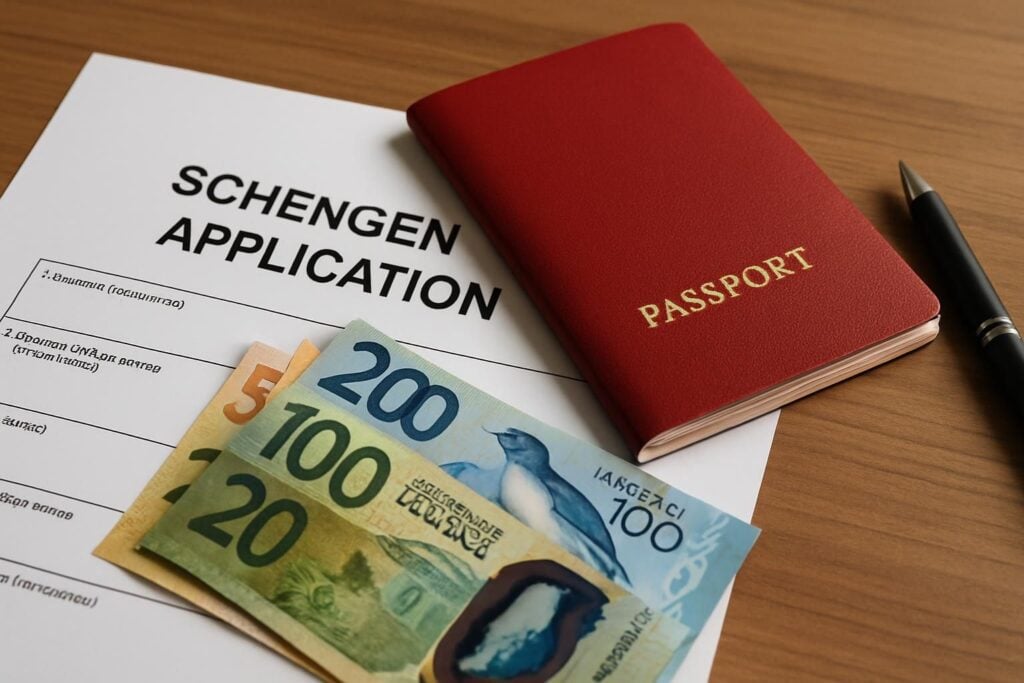

Introduction to Schengen visa Costs
In 2026, the landscape of Schengen visa costs has become increasingly relevant for New Zealanders planning to travel to Europe. Understanding the application fees and associated expenses can significantly impact the budget for your trip. The Schengen visa allows travellers to move freely between 26 European countries, and being aware of all costs involved is crucial for a smooth application process.
Executive Summary / TL;DR
For New Zealanders looking to obtain a Schengen visa in 2026, it’s important to be informed about the following:
-
The standard application fees vary based on the type of visa.
-
Additional costs such as service charges and travel insurance may arise.
-
An interactive tool can assist in comparing Schengen visa costs with other visa options in real-time.
-
Recent applicants have shared insights on hidden costs during their visa journeys.
Breakdown of Application Fees
Understanding the 2026 costs associated with a Schengen visa is essential. The application fees largely depend on the type of visa being applied for, and they can vary significantly. Below, we explore the different types of application fees that may apply in 2026.
Standard Application Fees
The standard fees for various types of Schengen visas in 2026 are as follows:
-
Short-Stay Visa (Type C): NZD 100
-
Long-Stay Visa (Type D): NZD 300
-
Child Visa (under 6 years): Free
-
Child Visa (aged 6-12 years): NZD 50
-
Multiple Entry Visa: NZD 150
These fees are consistent across many countries in the Schengen Area, but it’s wise for applicants to check the specific embassy’s website for any variations.
Additional Fees and Charges
Beyond the standard application fees, applicants should also anticipate potential additional costs that may apply:
-
Service Charges: Fees may apply if using a visa application centre.
-
Processing Fees: Higher fees may be charged for expedited processing.
-
Travel Insurance: A mandatory expense, usually costing between NZD 50 to NZD 200 depending on coverage.
-
Document Translation: Fees for translating necessary documents into the local language.
When budgeting for a Schengen visa, it’s crucial to account for these extra costs to avoid surprises later.
Interactive Comparison Tool
A helpful feature for potential travellers is an interactive visa comparison tool. This tool allows users to compare Schengen visa costs against other popular visa options, such as student or work visas, in real-time. It also includes:
-
Real-time exchange rates for accurate cost analysis.
-
A user-friendly interface to facilitate the comparison of total expenses.
This comparison can guide travellers in selecting the most cost-effective visa option based on their personal circumstances.
Case Studies from Recent Applicants
Gaining insights from those who recently navigated the Schengen visa process can illuminate potential hidden costs. Here are a few narratives:
“I thought my budget was enough until I realised I had to pay for travel insurance and document translation. These costs added up quickly!” – Emily, recent applicant.
“The application fee was straightforward, but I encountered unexpected service charges that I hadn’t budgeted for.” – James, recent applicant.
These experiences highlight the need to do thorough research and prepare financially for all aspects of the application process.
Key Takeaways Box
The main points regarding Schengen visa costs in 2026 include:
-
Standard application fees vary significantly based on visa type.
-
Additional costs can add up; thorough budgeting is essential.
-
Use available tools for real-time comparisons and better financial planning.
-
Learn from the experiences of others to avoid common pitfalls.
Authority Sources
For reliable information regarding visa guidelines and Schengen visa costs, you can refer to:
-
The European Commission’s official website
-
Your local embassy or consulate for the most accurate and updated information
-
The Ministry of Foreign Affairs and Trade in New Zealand
Call to Action / Conclusion
As we move through 2026, understanding Schengen visa costs and the associated expenses is more important than ever for New Zealanders planning to explore Europe. By staying informed about application fees and potential additional costs, you can ensure a more seamless visa application process. Consider leveraging available resources, like comparison tools and first-hand applicant experiences, to make well-informed decisions. Your European adventure awaits, so take the first step towards securing your Schengen visa today!
Citations
This text references the following articles:
-
Schengen visa fees — “Schengen visa fees ; Adults (12 years old and older), 103.00 ; Children (6 – 11 years old), 52.00 ; Children (younger than 6 years old), free.”
-
Discover the total Schengen Visa Application Cost in 2026 — “The standard Schengen visa (Type A and C) costs €90 for adults and €45 for children aged 6–11, and this fee is the same regardless of which …”
-
Schengen Visa Cost Guide: Essential Fees and Tips for Travelers — “Basic (starting at as little as €22/week), Essential, and Annual — meet all the requirements for being granted a Schengen visa. Up to €100,000 coverage in …”
-
Applying for a Schengen visa – Migration and Home Affairs — “How much does a visa cost? · €90 for adults · €45 for children aged 6-12 · €35 for applicants from Armenia, Azerbaijan, and Belarus · €67,50 for applicants from …”
-
Schengen Visa Fees 2026: Country-by-Country Cost Breakdown for … — “The Schengen visa fee is €90 for every adult applicant, real cost of a Schengen visa from India is ₹11,000–₹16,000 per person €45 for children …”