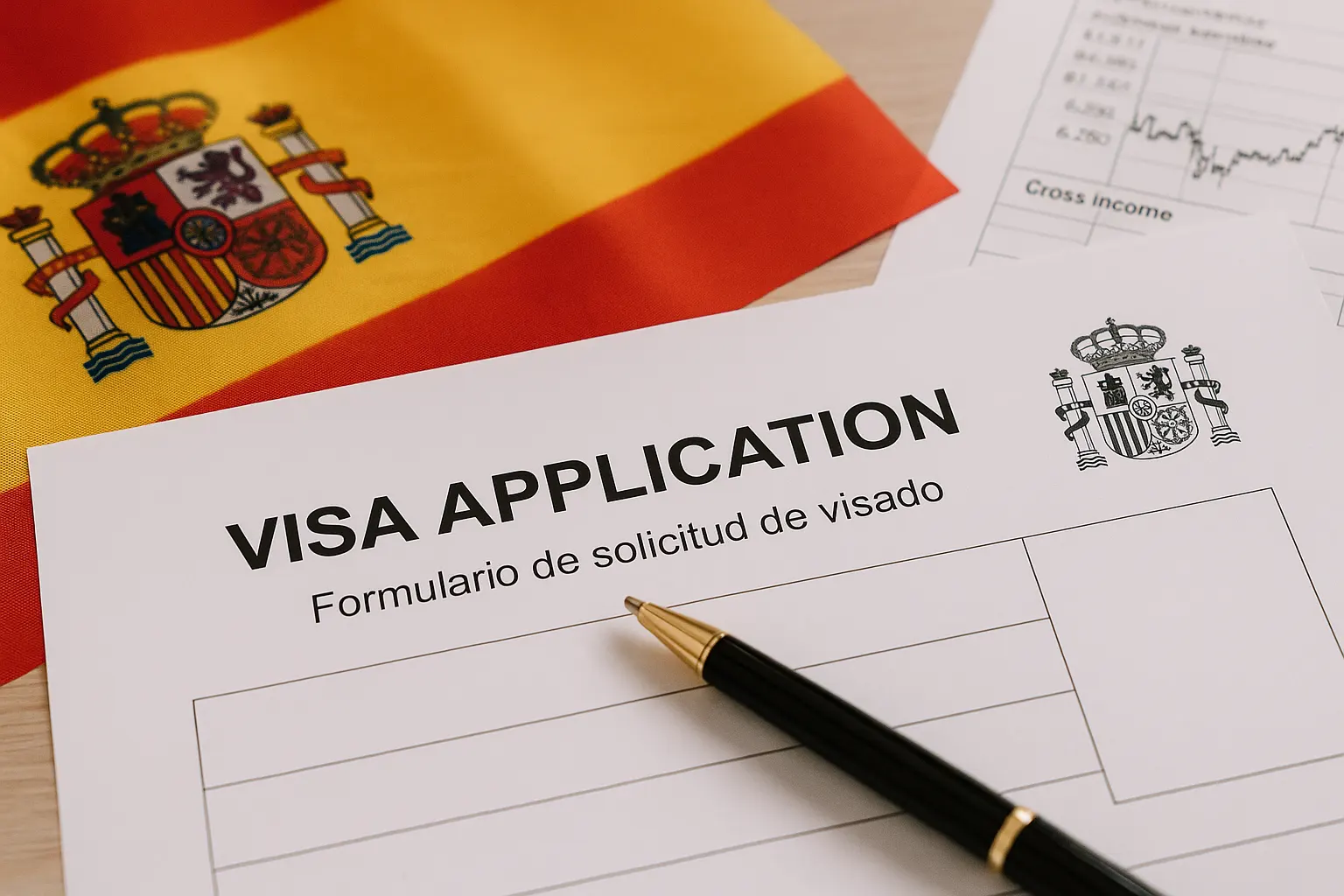
Securing a Schengen Visa opens the door to exploring 27 European countries, making it one of the most sought-after travel documents worldwide. The application process demands careful attention to detail, as even minor oversights can lead to rejection and lost time, money, and opportunities.
Your success in obtaining a Schengen Visa largely depends on avoiding common pitfalls that many applicants face. A well-prepared application demonstrates your credibility and travel intentions to immigration authorities, increasing your chances of approval.
Key aspects of a successful application include:
- Accurate documentation
- Proper financial proof
- Valid travel insurance
- Clear travel purpose
- Consistent information across all documents
Understanding these elements helps you navigate the application process with confidence. This guide highlights critical mistakes to avoid, ensuring you present a strong case for your Schengen Visa application.
If your lifestyle allows for remote work, you might also want to explore options like becoming a digital nomad, or applying for a digital nomad visa in Spain which offers unique residency benefits.
Understanding the Schengen Visa
The Schengen visa system consists of three main categories, each designed for specific travel purposes:
1. Type A (Airport Transit Visa)
- Permits travelers to pass through international transit zones at Schengen airports
- Required for specific nationalities during layovers
- Does not allow entry into the Schengen territory
2. Type C (Short-Stay Visa)
- Valid for stays up to 90 days within a 180-day period
- Covers tourism, business meetings, family visits
- Single-entry, double-entry, or multiple-entry options available
- Most common type for tourists and business travelers
3. Type D (Long-Stay Visa)
- Issued for stays exceeding 90 days
- Required for work, study, or permanent residence
- National visa granted by individual Schengen member states
- Can be combined with residence permits
Your travel purpose directly impacts which visa type you need. A business traveler attending a week-long conference requires a Type C visa, while a student planning to study for a semester needs a Type D visa.
Selecting the wrong visa category can result in immediate application rejection and travel delays. The visa requirements vary based on your nationality, intended duration of stay, and specific activities planned during your visit. Each Schengen member state maintains its own criteria for visa issuance, particularly for Type D visas.
Top 10 Mistakes to Avoid When Applying for a Schengen Visa
A successful Schengen visa application requires careful attention to detail and proper preparation. Many applications face rejection due to preventable mistakes. Here are the critical errors you need to avoid during your application process.
1. Insufficient Funds
Your financial capacity plays a vital role in the visa approval process. Immigration officers need proof that you can support yourself during your stay in the Schengen area.
Required Daily Amount Per Country:
- France: €120 per day
- Germany: €45 per day
- Spain: €100 per day
- Italy: €50 per day
- Netherlands: €55 per day
Acceptable Proof of Financial Means:
- Bank statements from the last 3-6 months
- Recent salary slips
- Tax returns
- Property ownership documents
- Fixed deposits
- Investment portfolios
For Sponsored Trips:
- Sponsorship letter with sponsor’s financial documents
- Proof of relationship with sponsor
- Sponsor’s bank statements
- Notarized affidavit of support
The bank statements you submit must show:
- Regular income deposits
- Stable account balance
- No suspicious large deposits
- Account holder’s name matching passport details
- Bank’s official letterhead and stamp
Tips for Financial Documentation:
- Keep minimum three months of consistent account activity
- Maintain sufficient balance throughout the statement period
- Avoid last-minute large deposits
- Ensure all documents are in English or translated by certified translators
- Submit original bank statements, not photocopies
Your financial documentation should align with your planned itinerary and duration of stay. The amount needed varies based on your accommodation type, planned activities, and the specific countries you’ll visit within the Schengen area.
2. Lack of Valid Travel Insurance
Travel insurance isn’t just a formality – it’s a mandatory requirement for your Schengen visa application. The Schengen authorities require specific coverage details:
- Minimum coverage of €30,000 for medical emergencies
- Valid across all Schengen member states
- Coverage for the entire duration of your stay
- Repatriation coverage in case of death
Your insurance policy must meet these essential criteria:
- Medical expenses and emergency hospital treatment
- Emergency medical evacuation
- Repatriation of remains
- 24/7 assistance services
- Zero deductible
You can obtain valid Schengen travel insurance through:
- International insurance providers
- Local insurance companies in your home country
- Online insurance platforms specializing in Schengen coverage
- Bank-issued travel insurance policies
The insurance certificate must display your full name, policy number, coverage dates, and geographical coverage area. The embassy checks these details carefully – any missing information can lead to immediate rejection of your visa application.
Remember to check the insurance company’s reputation and ensure they’re recognized by Schengen authorities. Some embassies maintain lists of approved insurance providers for visa applicants.
If you’re planning to stay longer or have specific residency needs in Spain, obtaining a NIE (Número de Identificación de Extranjero) could be beneficial.
3. Incorrect Document Submission
Submitting incorrect or incomplete documentation is a critical error in Schengen Visa applications. The visa authorities require specific documents based on your visa type, and missing any can result in immediate rejection.
Essential Documents for Schengen Visa Applications:
- Valid passport (less than 10 years old)
- Recent passport-sized photos meeting Schengen specifications
- Completed and signed visa application form
- Proof of accommodation for entire stay
- Round-trip flight reservations
- Employment documentation (contract, leave approval)
- Bank statements from the last 6 months
- Travel insurance certificate
Common Documentation Errors:
- Submitting photocopies instead of original documents
- Using outdated application forms
- Providing unclear or low-quality passport photos
- Missing document translations
- Incomplete bank statements
A single missing or incorrect document can delay your application by weeks or trigger an outright rejection. The visa processing officers maintain strict documentation standards, requiring clear, legible copies and certified translations for non-English documents. You need to double-check each requirement specific to your visa type and ensure every document meets the exact specifications. For instance, if you’re applying for a non-lucrative visa and fail to meet the document requirements, your application could be denied.
4. Applying for the Wrong Visa Type
Selecting the correct Schengen visa type is a critical decision in your application process. Each visa category serves distinct travel purposes:
Type A (Airport Transit Visa)
- Required for passing through airport international transit zones
- Not valid for entering the Schengen territory
- Essential for specific nationality holders during layovers
Type C (Short-Stay Visa)
- Permits stays up to 90 days within a 180-day period
- Covers tourism, business meetings, family visits
- Available as single-entry, double-entry, or multiple-entry
Type D (Long-Stay Visa)
- Designed for stays exceeding 90 days
- Applicable for work, study, or family reunification
- Requires additional documentation specific to your purpose
You need a Type A visa when connecting flights through Schengen airports without entering the country. Choose Type C for your vacation plans or business trips. Select Type D if you’re planning to study, work, or join family members for extended periods.
5. Contradictory Information Across Documents
Inconsistencies across your application documents can raise red flags and trigger immediate rejections. Embassy officials scrutinize every detail, looking for matching information in:
- Names and surnames (including spelling variations)
- Birth dates and places
- Passport numbers
- Travel dates
- Employment details
- Address information
- Contact numbers
Your application forms must align perfectly with supporting documents like:
- Bank statements
- Employment letters
- Hotel reservations
- Flight bookings
- Travel insurance certificates
Common Discrepancy Issues:
- Different name spellings on passport vs. bank statements
- Mismatched travel dates between hotel bookings and visa application
- Inconsistent job titles or company names
- Varying address formats across documents
Pro Tips:
- Create a document checklist with key details
- Review all dates, numbers, and spellings multiple times
- Keep copies of submitted documents for reference
- Request corrections for any official documents with errors before submission
- Use exact names as they appear in your passport across all paperwork
A single discrepancy can delay your application by weeks or result in rejection. Embassy officials interpret inconsistencies as potential fraud indicators, triggering additional verification processes.
6. Inadequate Time Allocation for Application Process
Rushing your Schengen Visa application can lead to costly mistakes and potential rejection. You need to start your application process at least two months before your planned travel date. This timeline allows you to:
- Gather necessary documentation
- Schedule visa appointments
- Address potential issues with paperwork
- Make corrections if needed
- Account for embassy processing times
The standard processing time for a Schengen Visa ranges from 15 to 30 calendar days. During peak travel seasons (summer months and holidays), processing times can extend beyond the standard duration.
Key Timeline Considerations:
- Submit application 2-3 months before travel
- Book visa appointment 3-4 weeks in advance
- Allow 15-30 days for processing
- Factor in additional time for document collection
- Consider embassy-specific requirements
You can track your application status online through the embassy’s visa portal. Some embassies offer expedited processing for an additional fee, but this service isn’t guaranteed and depends on your case’s complexity and the embassy’s current workload.
7. Damaged or Invalid Passport Submission
Your passport is the main identification document you need for applying for a Schengen Visa. The Schengen authorities have strict rules about how long your passport should be valid and its overall condition:
Essential Passport Requirements:
- Your passport must have been issued within the last 10 years.
- It should be valid for at least 3 months beyond the date you plan to return.
- There should be at least two blank pages in your passport for visas.
- Your passport must not have any unauthorized changes or alterations.
Physical Condition Standards:
- There should be no pages that are detached or loose.
- Your passport should not have any water damage or stains.
- The corners of your passport should not be torn or damaged.
- The biographical page of your passport should be clear and readable.
- The cover of your passport should be intact.
- Any security features in your passport should be visible.
To keep your passport safe and in good condition, you can:
- Use a protective cover for it.
- Store it in a dry and secure place.
- Avoid exposing it to extreme temperatures.
- Keep it away from liquids and sharp objects.
If you notice any damage on your passport or if it is nearing its expiration date, make sure to apply for a new one before you submit your Schengen Visa application. Even if you have an approved visa, immigration officers can still deny you entry if they find that your passport is damaged or compromised.
8. Unclear Purpose or Itinerary Provided in Application
Your travel intentions must be crystal clear to visa officers. A vague or poorly structured itinerary raises red flags and can lead to immediate rejection of your Schengen visa application.
A strong itinerary includes:
- Day-by-day breakdown of your planned activities
- Specific locations you plan to visit
- Confirmed accommodation bookings with reservation numbers
- Transportation arrangements between cities or countries
- Contact details of hotels, tour operators, or business partners
You need to demonstrate the authenticity of your travel purpose through supporting documents:
- Business meetings? Include invitation letters from companies
- Tourism? Add museum tickets or guided tour bookings
- Family visit? Provide proof of relationship and invitation letter
Your itinerary should match your visa type – if you’re applying for a business visa, your schedule should primarily reflect business activities. Tourist visa applications need to show a balanced mix of sightseeing and cultural activities.
Remember to keep your plans realistic. Cramming too many destinations into a short timeframe can make your application appear unrealistic to visa officers.
9. Failure to Disclose Criminal History During the Application Process
Honesty is crucial when applying for a Schengen Visa. The consequences of hiding your criminal history can be severe and long-lasting:
- Immediate Visa Rejection: Authorities conduct thorough background checks, making discovery of undisclosed criminal records likely
- Multi-Year Entry Bans: Dishonesty can result in bans ranging from 3-10 years across all Schengen countries
- Permanent Record: False declarations create a permanent negative mark on your immigration history
Your criminal history doesn’t automatically disqualify you from obtaining a visa. The evaluation process considers:
- Nature and severity of the offense
- Time elapsed since the incident
- Your current circumstances
- Rehabilitation evidence
Best Practices for Disclosure:
- Provide certified court documents
- Include character references
- Submit proof of rehabilitation
- Attach a personal statement explaining past incidents
Remember: Immigration authorities value transparency. A minor offense honestly declared poses less risk to your application than a discovered attempt at concealment.
10. Missing Supporting Documents That Strengthen Your Case
A strong Schengen visa application requires comprehensive documentation beyond the basic requirements. You need supporting documents that paint a complete picture of your travel intentions and personal circumstances.
Essential supporting documents include:
- Proof of accommodation for your entire stay
- Detailed day-by-day travel itinerary
- Round-trip flight reservations
- Recent pay slips (last 3 months)
- Employment contract or business registration
- Property ownership documents
- Marriage certificate (if applicable)
- Birth certificates of children (if applicable)
- Student ID or enrollment proof
- Reference letters from employers/educational institutions
- Tax returns from previous years
- Credit card statements
Pro tip: Create a document checklist specific to your situation. A self-employed applicant needs different supporting documents than a student or employee. Your documents should demonstrate strong ties to your home country and clear reasons for returning after your trip.
Remember to include translated versions of documents not in English or the language of the embassy where you’re applying. Each document strengthens your case and reduces the risk of visa rejection.
Seeking Expert Guidance for a Successful Schengen Visa Application Process
The Schengen visa application process demands attention to detail and precise documentation. When you face complex requirements or unique circumstances, professional guidance can make the difference between approval and rejection.
Why Choose Expert Guidance?
Immigration experts bring valuable benefits to your application:
- Deep Understanding of Requirements: Legal professionals stay updated with the latest visa regulations and policy changes
- Personalized Document Review: Expert assessment of your specific case ensures all necessary documentation is properly prepared
- Application Strategy: Professional guidance helps present your case in the strongest possible light
- Time and Stress Reduction: Expert assistance streamlines the process and minimizes potential delays
How NIM Lawyers Can Help
NIM Lawyers specializes in Schengen visa applications, offering:
- Comprehensive document preparation support
- Personalized consultation for your specific situation
- Strategic guidance throughout the application process
- Professional representation if complications arise
You can contact NIM Lawyers for expert assistance with your Schengen visa application. Our team of experienced immigration professionals will guide you through each step, helping you avoid common mistakes and maximize your chances of approval.
In addition to Schengen visas, we also provide assistance with other types of visas such as the Spain non-lucrative visa for retirees, which allows individuals to reside in Spain without engaging in any lucrative activities. This could be an ideal option for retirees looking to enjoy their golden years in Spain.
Ready to start your Schengen visa application? Book a consultation with our immigration experts today by visiting our contact page.